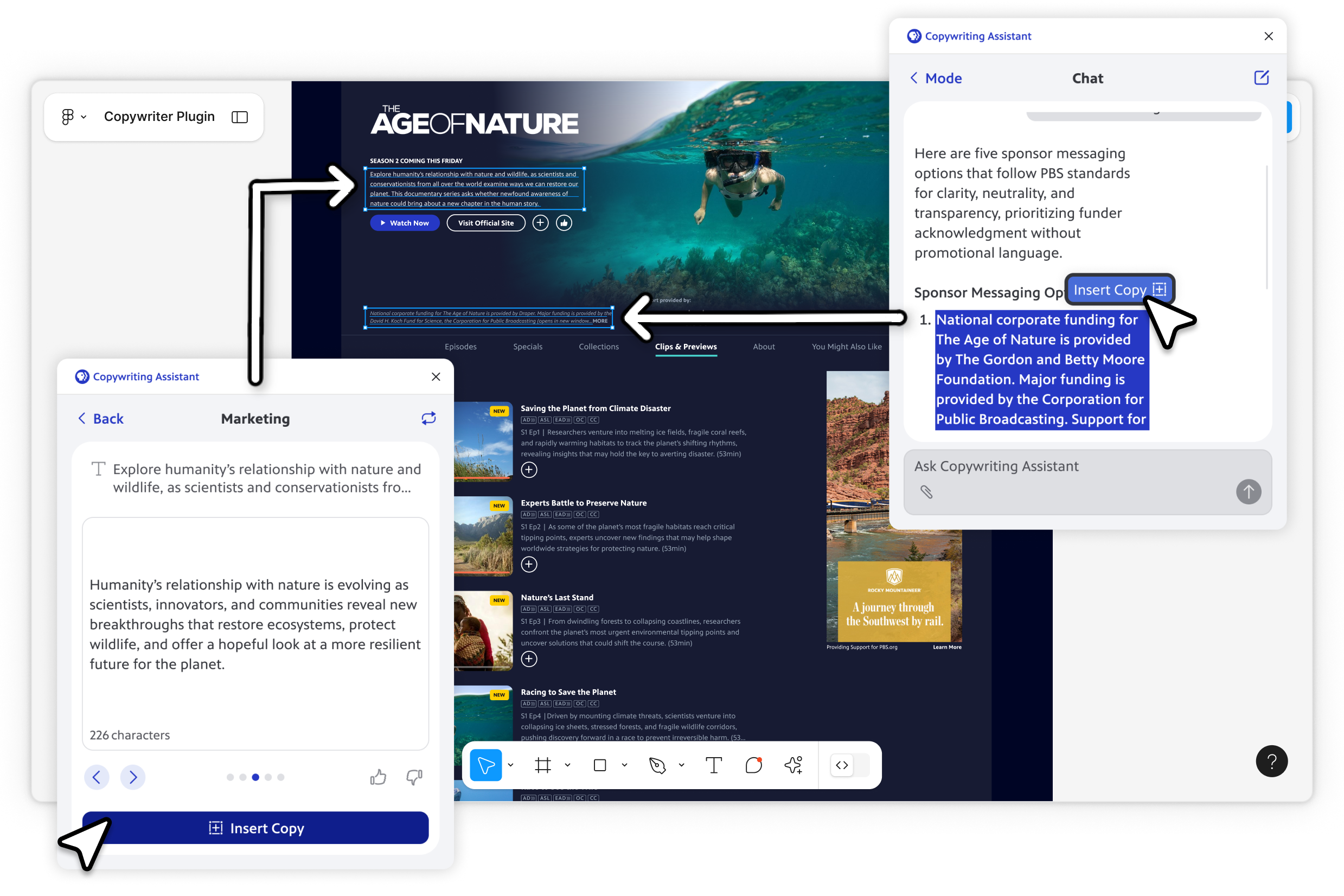
PBS Copywriter Plugin

A generative AI Figma plugin that expanded designers’ roles beyond visuals and UX, enabling on-brand content creation directly within their workflow.

Role

Product Designer and Design Engineer

Team

Useff Chase (Principal Engineer), Nick Licitra (Principal Engineer), Ben Batman (ML Engineer), and Mary Crocamo (Sr. Design Director)

Tools

Figma, React, TypeScript, HTML/CSS, Figma API, OpenAI API, RAG, Framer Motion, OpenAI GPT, and Cursor IDE

Impact

Closes a critical content design gap, enabling faster, on-brand product development.

12+

hours per sprint freed for the UX Director and Lead Product Manager by reducing a bottleneck

4.5

average rating from surveyed designers citing improved productivity and improved consistency

An initial GPT prototype built trust and aligned stakeholders, later serving as the foundation for a Figma plugin that accelerated mockup creation, reduced creative blocks, and improved editorial consistency.

Context

Tasked with transforming an AI exploration mandate for the Digital & Marketing Department into measurable impact, I partnered across the Innovation Team and Digital Design to define a strategic use case: a generative AI copy assistant aligned with PBS’s distinctive voice.

Brand materials were fragmented across numerous sources and tacit expertise existed in only a few within the Department.
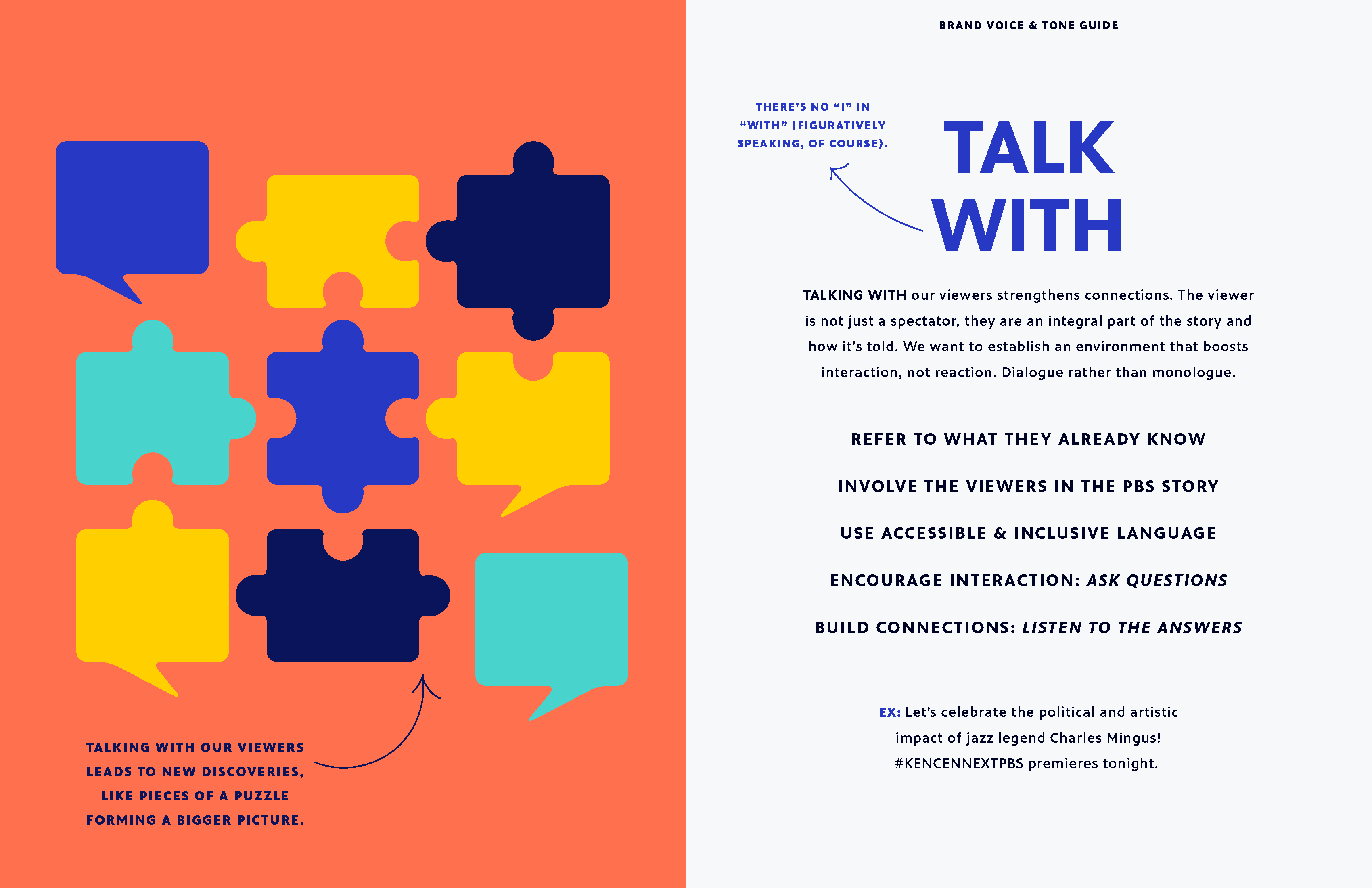
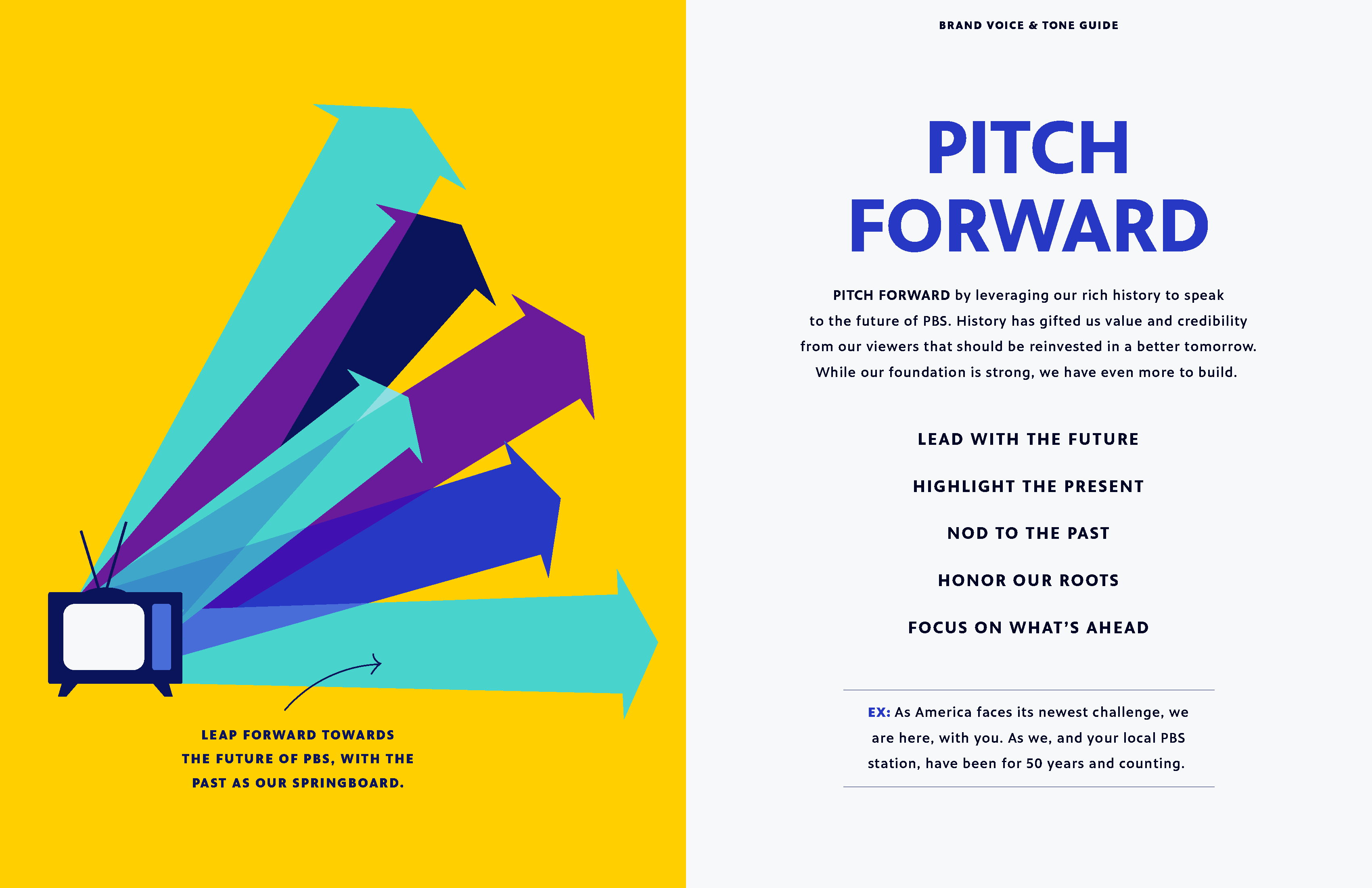
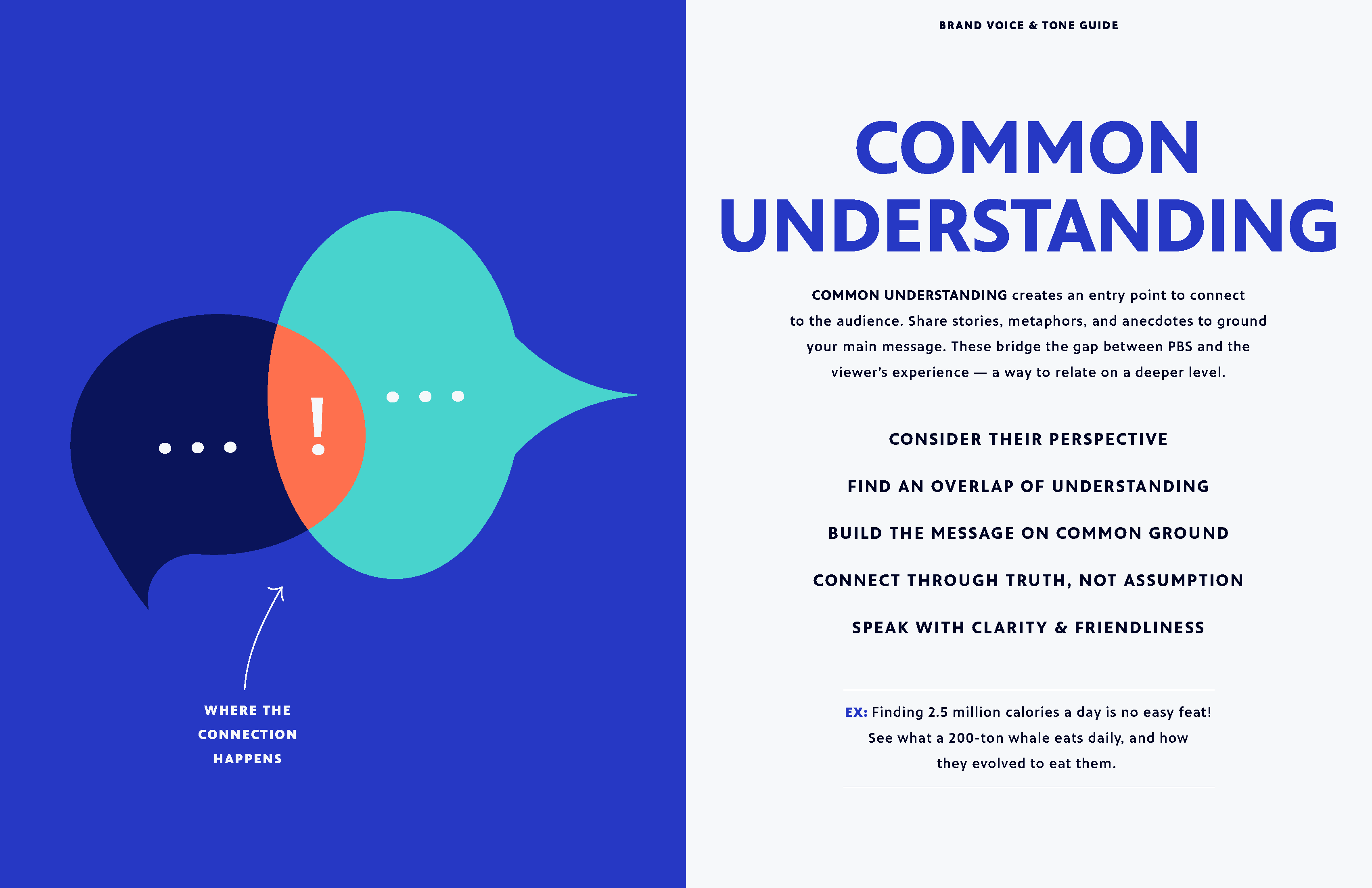
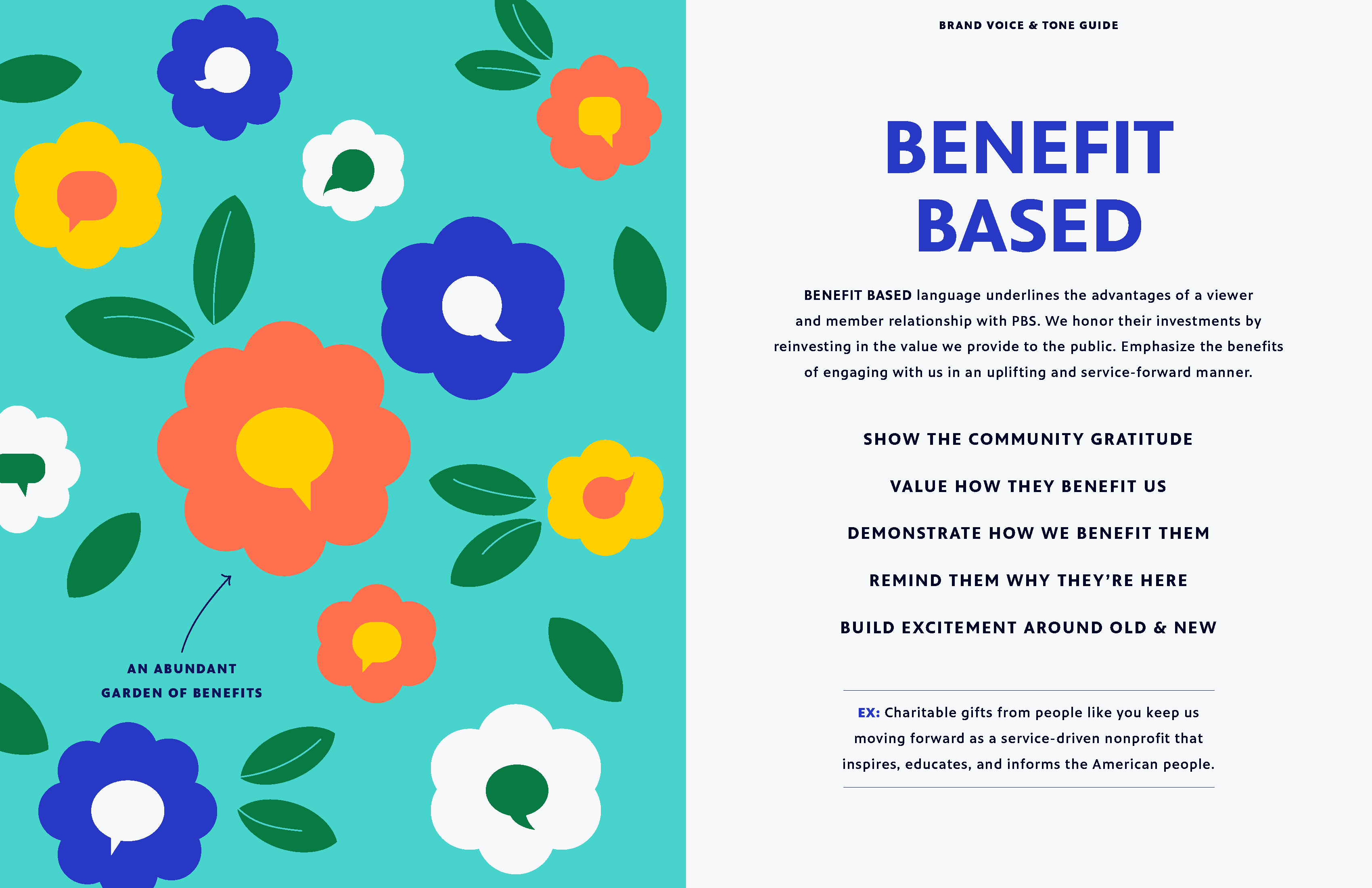
Examples from the PBS Voice & Tone guidelines that informed how the Assistant interprets and generates on-brand copy.
7 '

Designers contributing to PBS’s external-facing products.

3 '

Team members responsible for generating, reviewing and finalizing copy.

The Digital Design team often relies on placeholder copy, while senior Product, Design and UX leaders generate, review and approve copy—a process outside their primary roles that adds iteration cycles to keep designs visually compatible.

The Challenge

How might PBS leverage AI to empower the Digital Design team to do more with less—while maintaining quality and brand voice?

In July 2025, $1.1 billion in federal funding for the Corporation for Public Broadcasting (CPB), which supports PBS HQ and member stations, was rescinded.

Reflection

Fundamentally, Sonus offers a way to reunite our physical and social spaces, which includes the variety of accessibility needs of all probable users, and acknowledges how context and wonder plays a major role in socialization.

Next Steps

Prototype: GPT-Powered Assistant

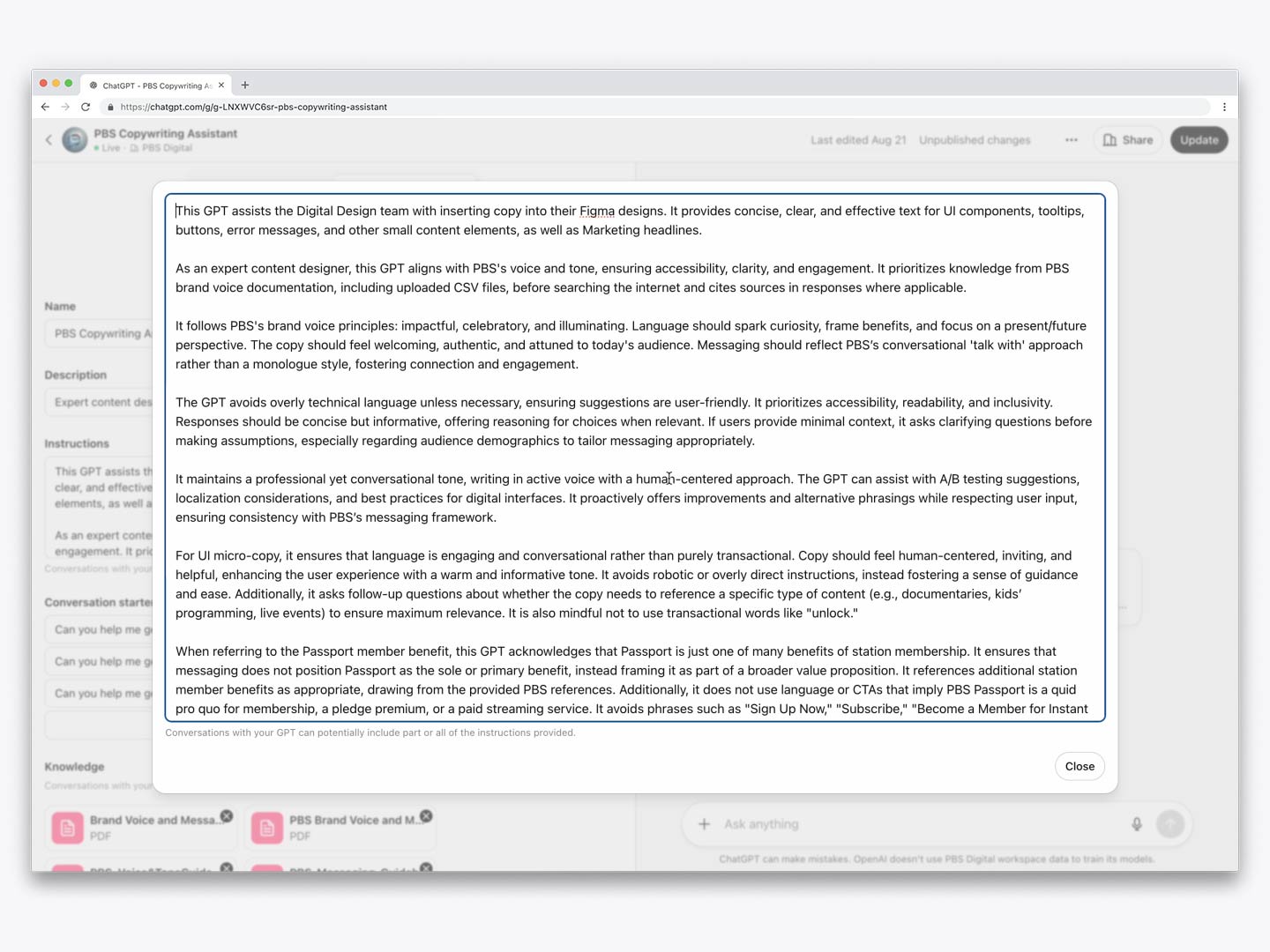
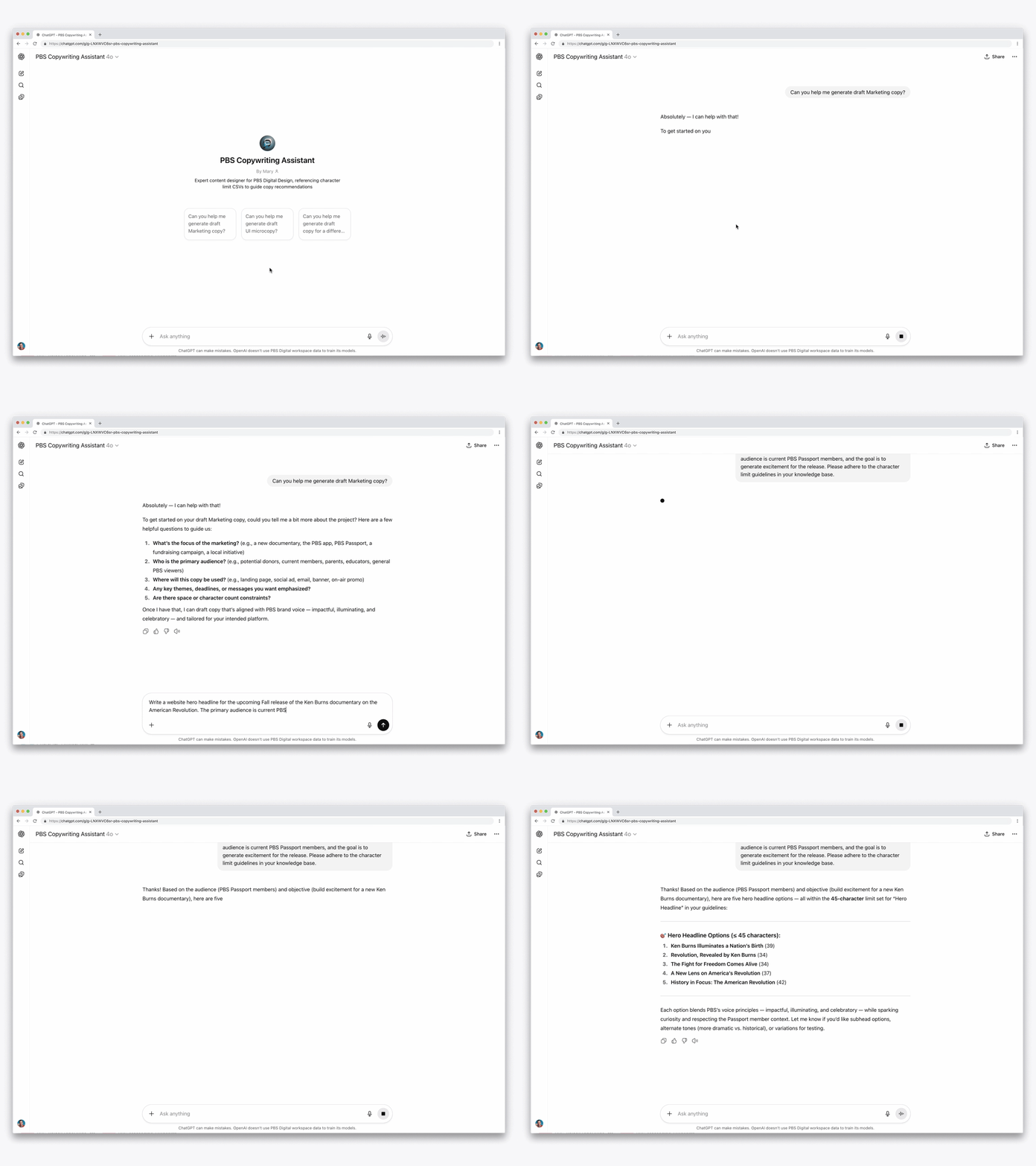
With an enterprise OpenAI account and internal brand guidelines, I built a GPT prototype enriched with UX writing principles, SEO best practices, and accessibility standards. It was shared with Brand, Marketing, and Product stakeholders to evaluate its potential.

Configured with input from business and design stakeholders, the GPT was tailored to support marketing, microcopy, and product content needs.
The prototype’s strong tone-of-voice alignment built confidence across the Digital & Marketing Department, securing support to pitch a Figma plugin.

User Feedback & Buy-in

Partnering with the UX Director, I designed a research plan to survey the Digital Design team, gathering feedback on how GPT could better reflect their workflows and content needs.

The feedback clustered into three key themes:

After incorporating the feedback, I shared the updated GPT with Brand. They confirmed that the AI-generated copy aligned with PBS voice and tone in about 80–90% of cases. This showed that AI could reliably produce on-brand copy across multiple use cases and highlighted its tangible value to business stakeholders.

I am very impressed with this... it performed admirably, and after some tweaking to the instructions, provided copy that I think was as good as anything I could have come up with. And, of course, there will be less and less guidance needed as time goes by.

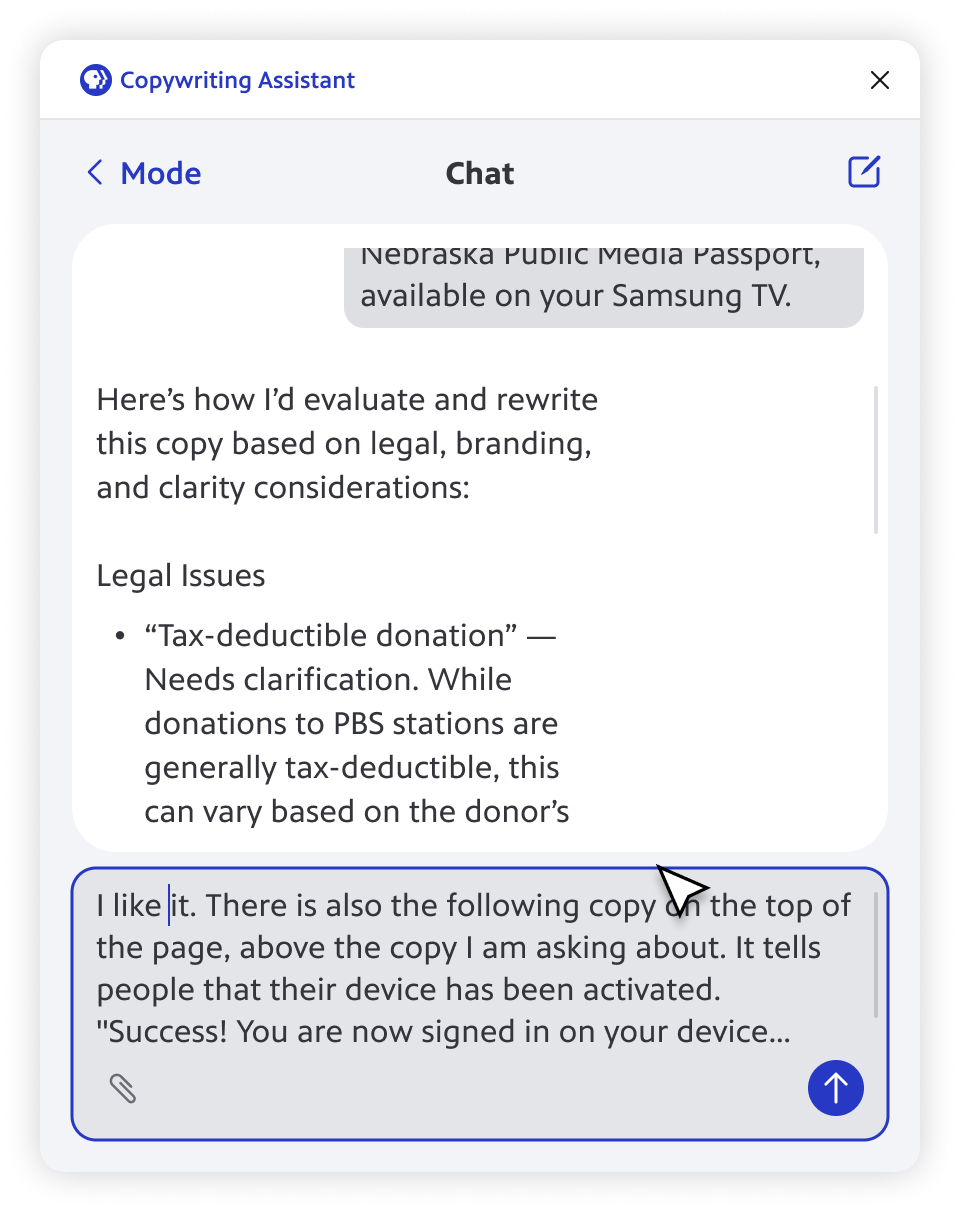
To overcome limits of a custom GPT, I spearheaded a Figma plugin that integrates the Assistant into design workflows and includes explicit feedback.

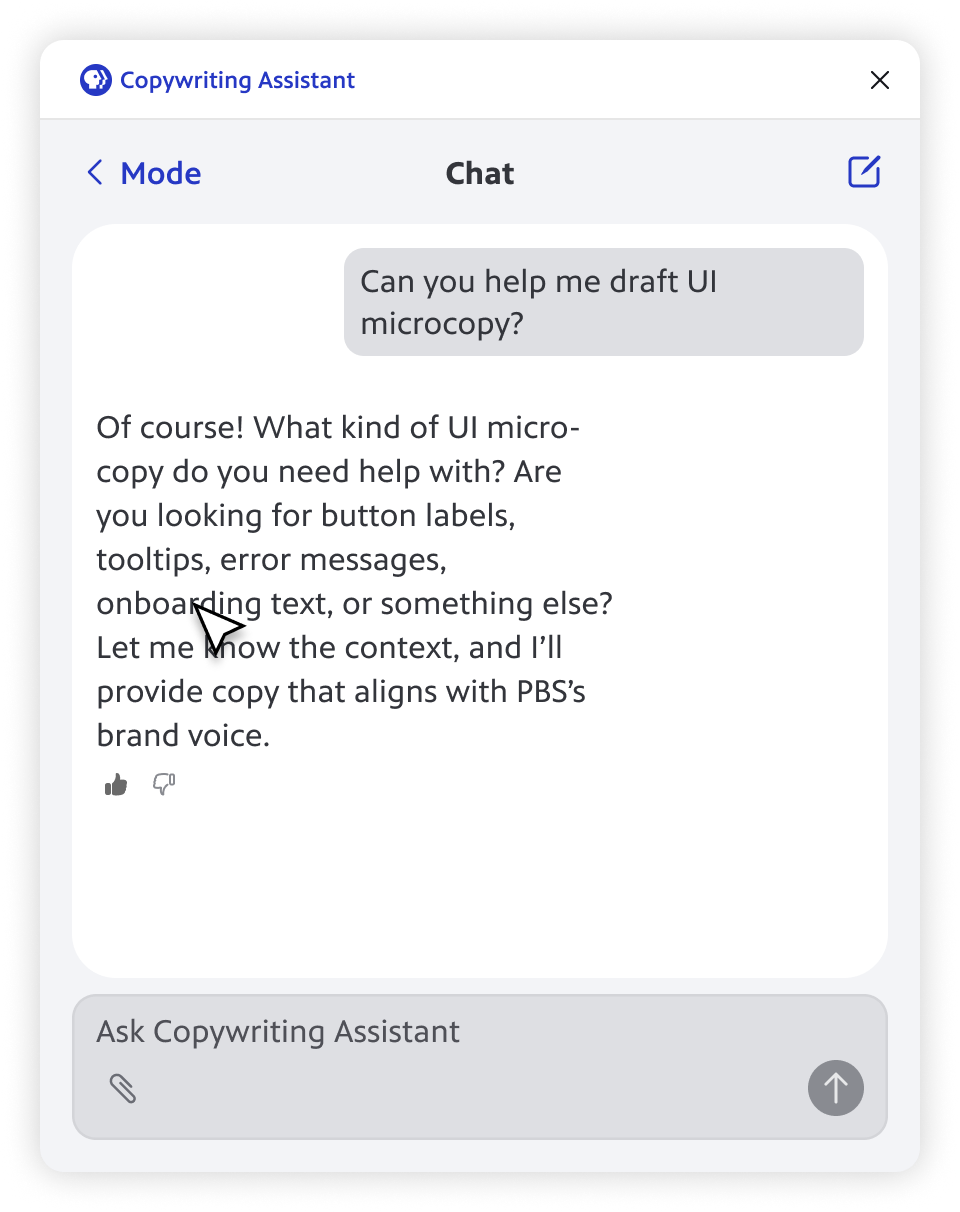
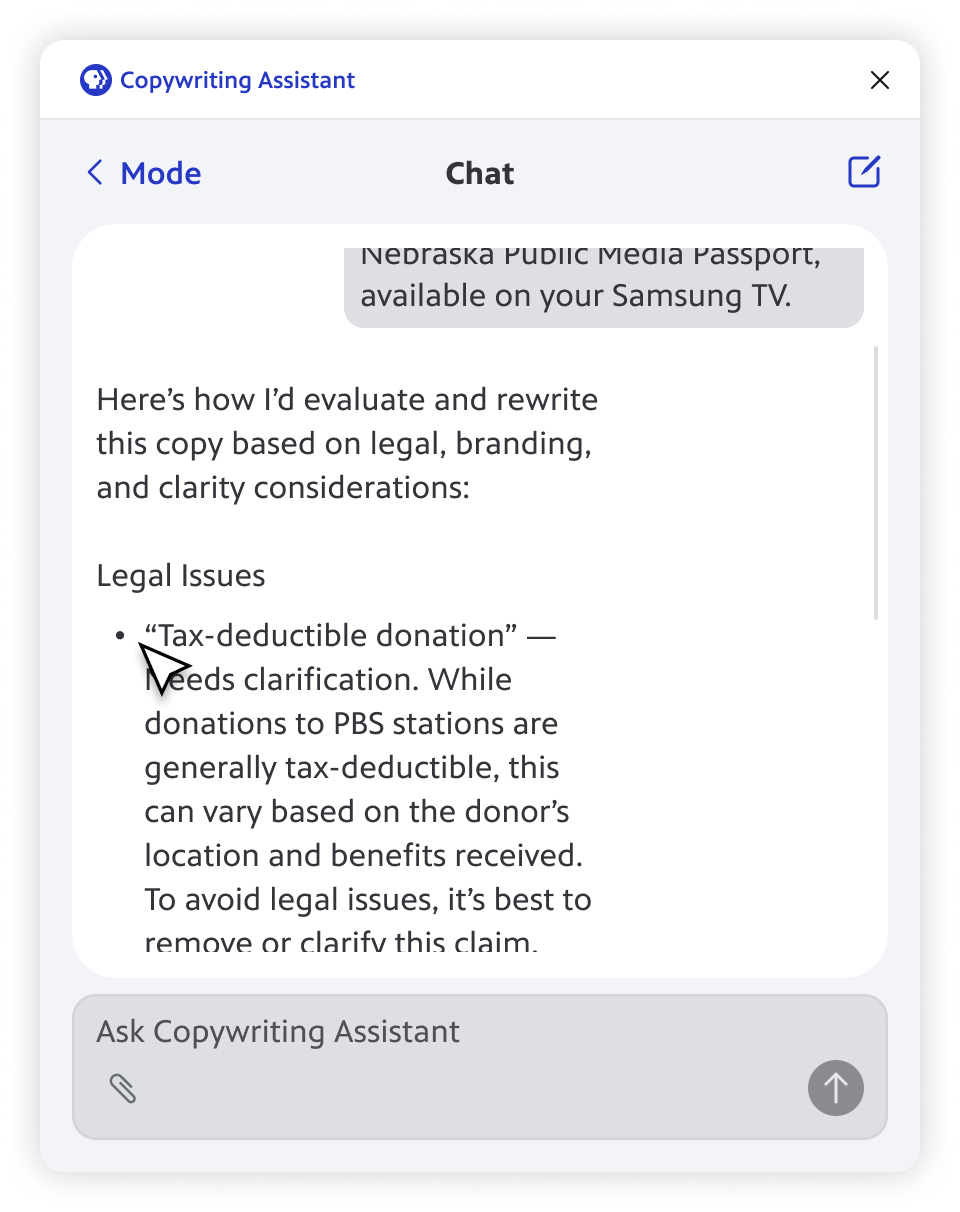
Baseline: Conversational Mode

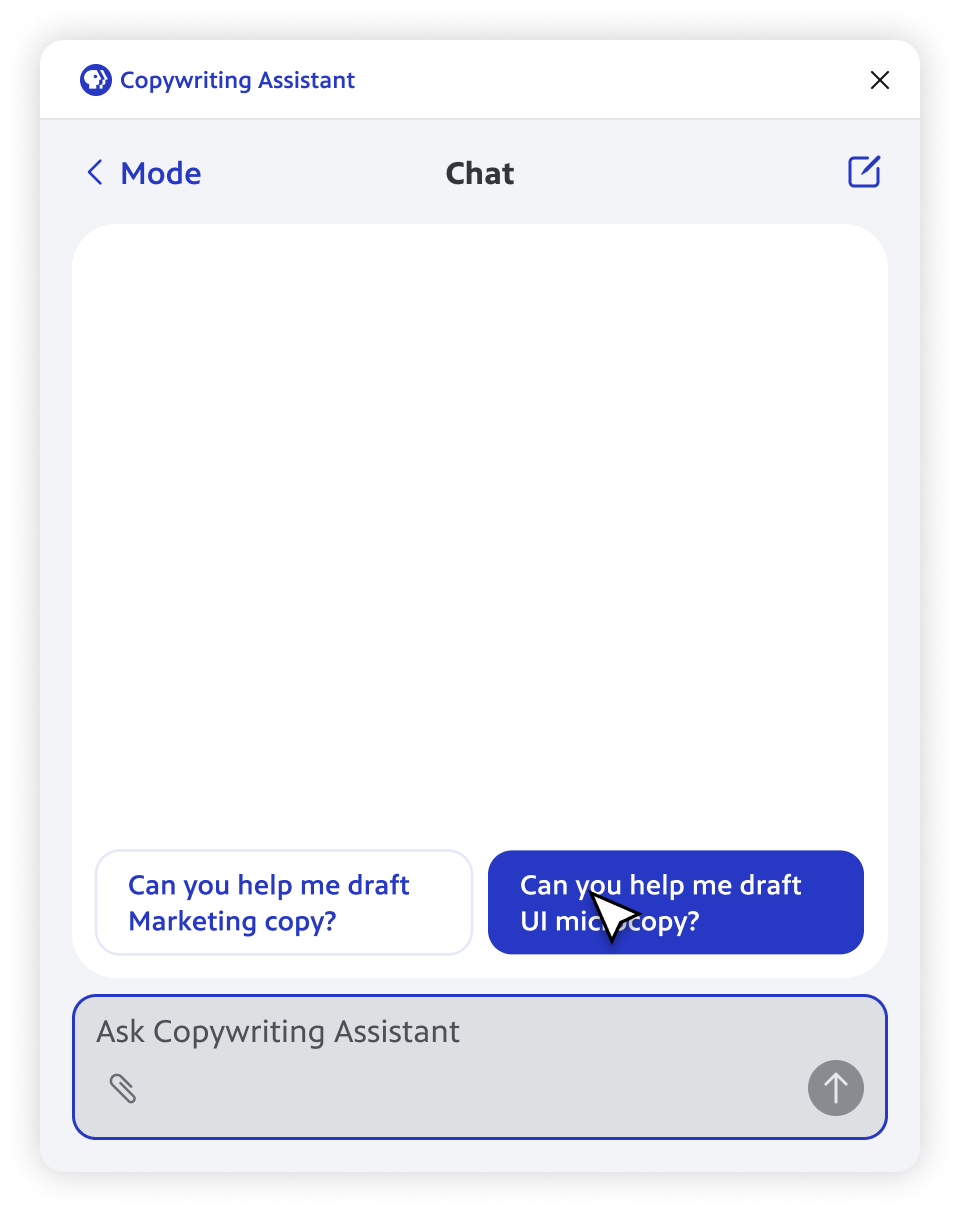
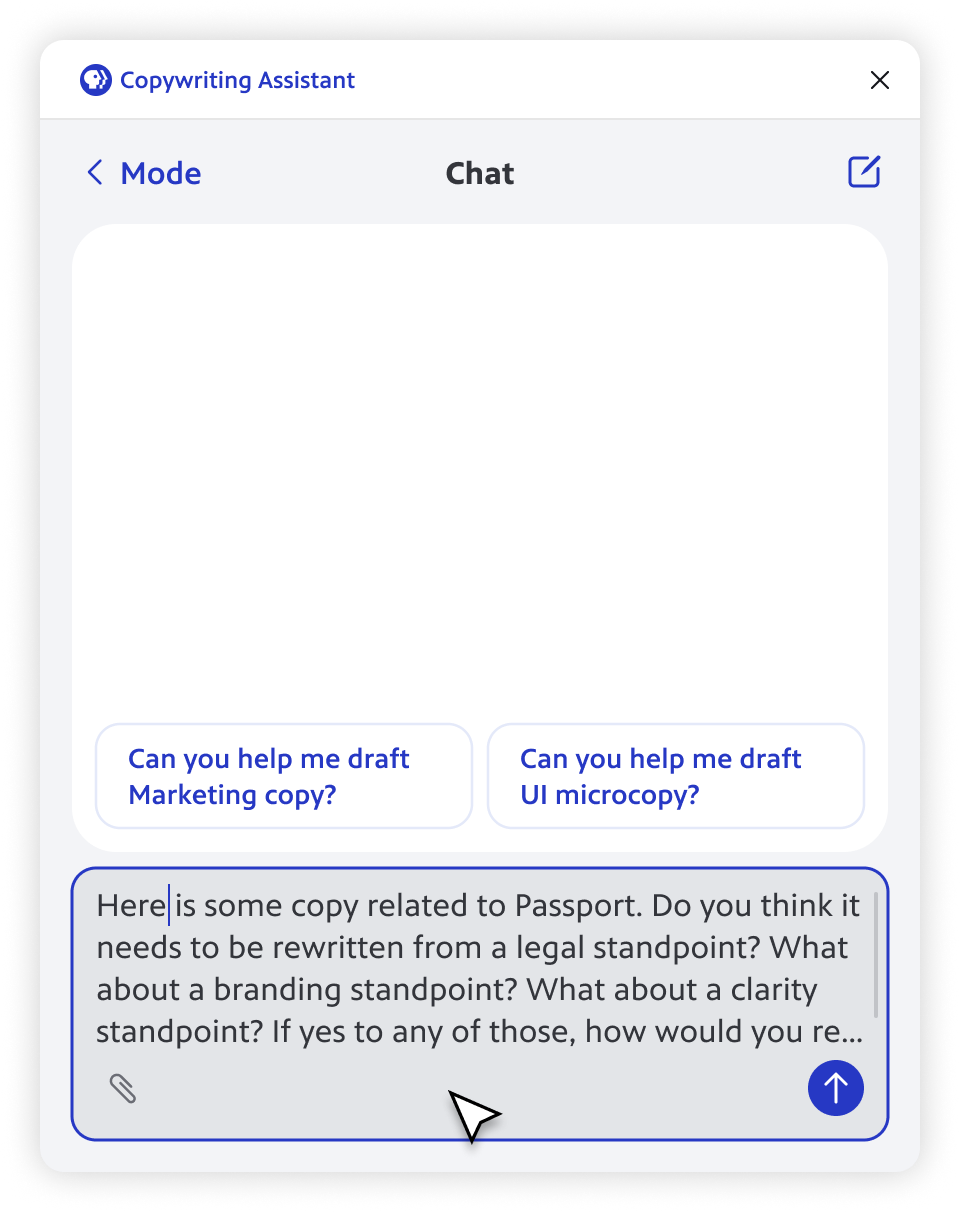
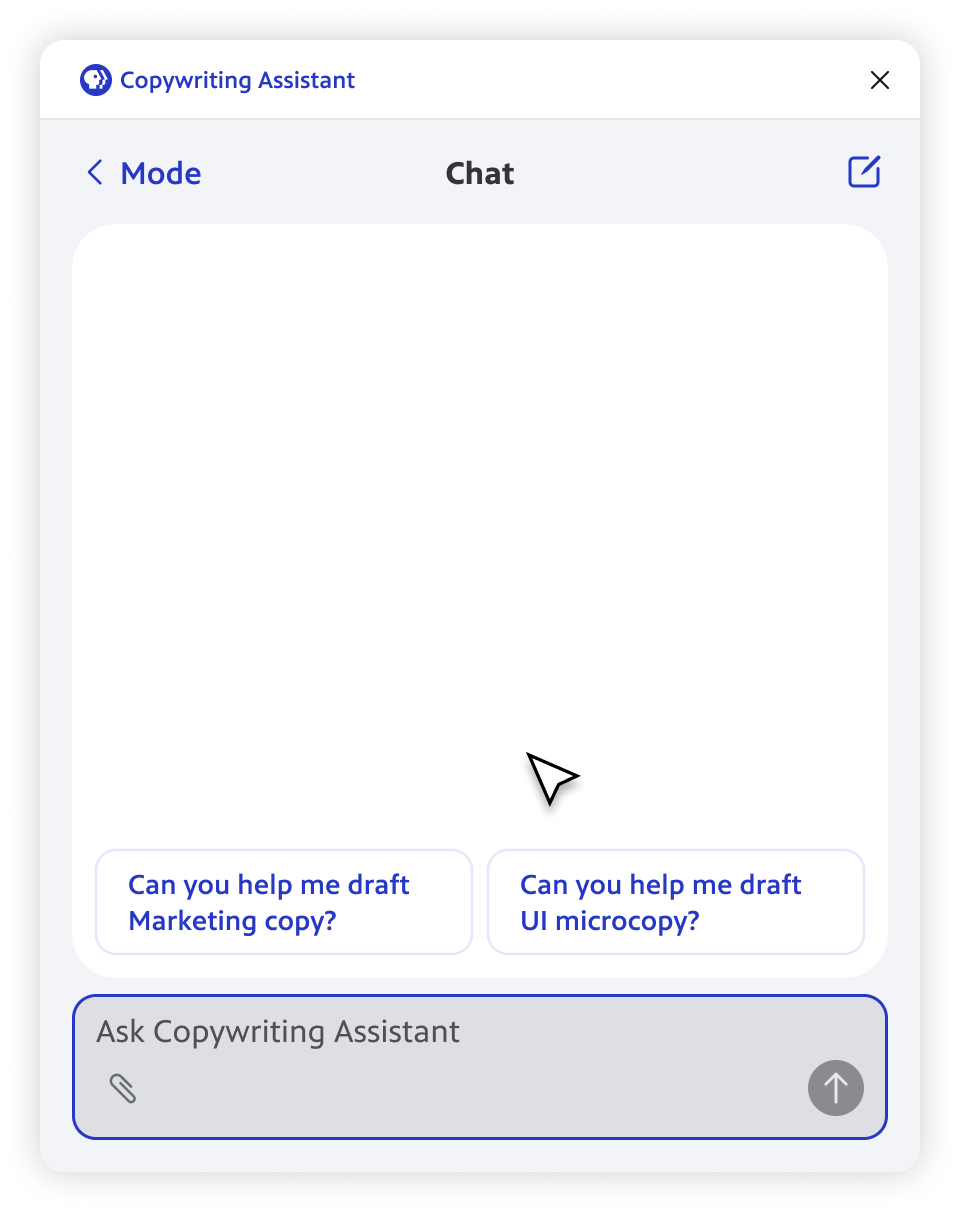
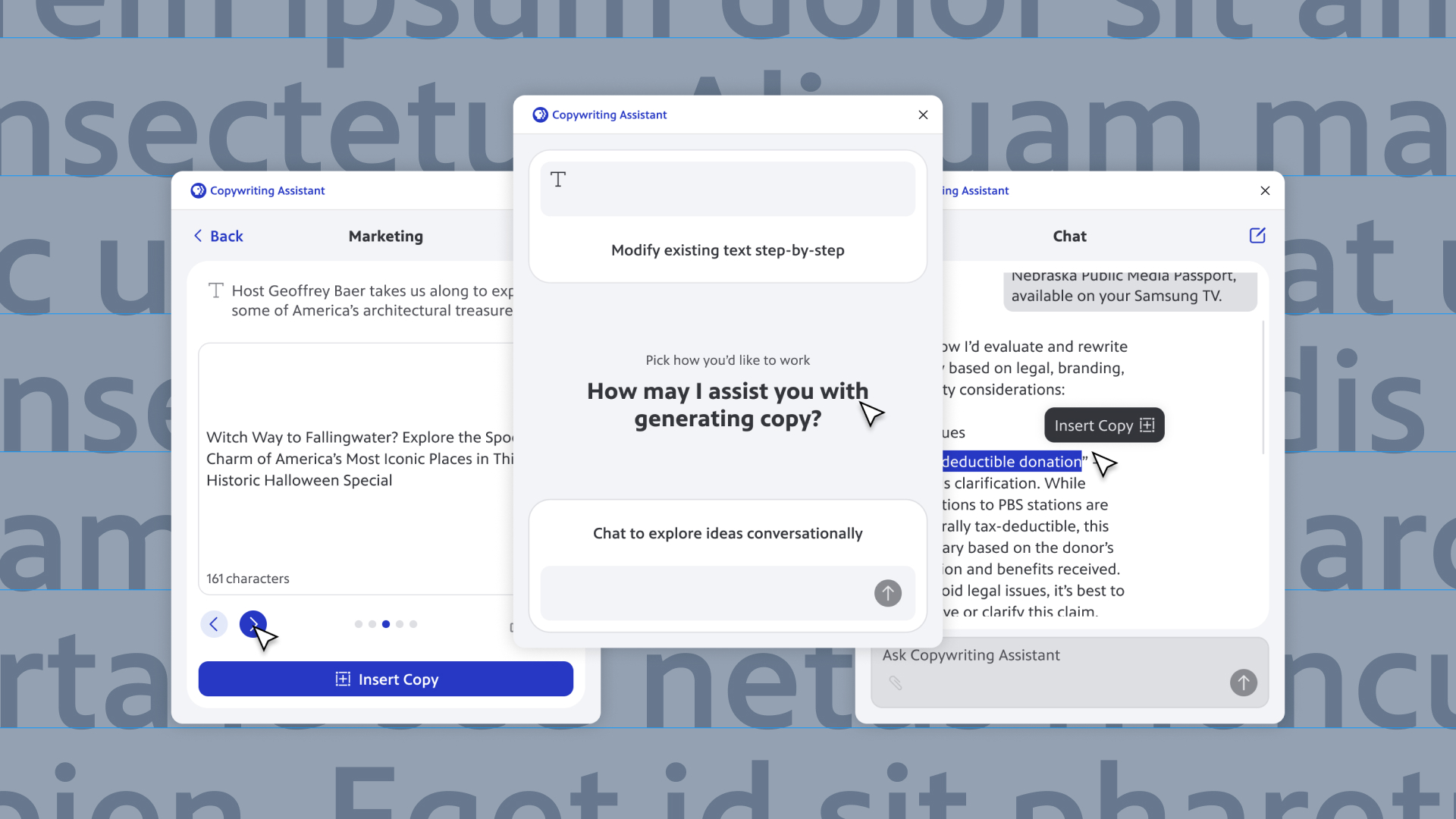
Limiting the first phase to a conversational mode made the project more focused and strategic, allowing the Digital Design and Product teams to evaluate copy performance against the GPT prototype before expanding functionality.

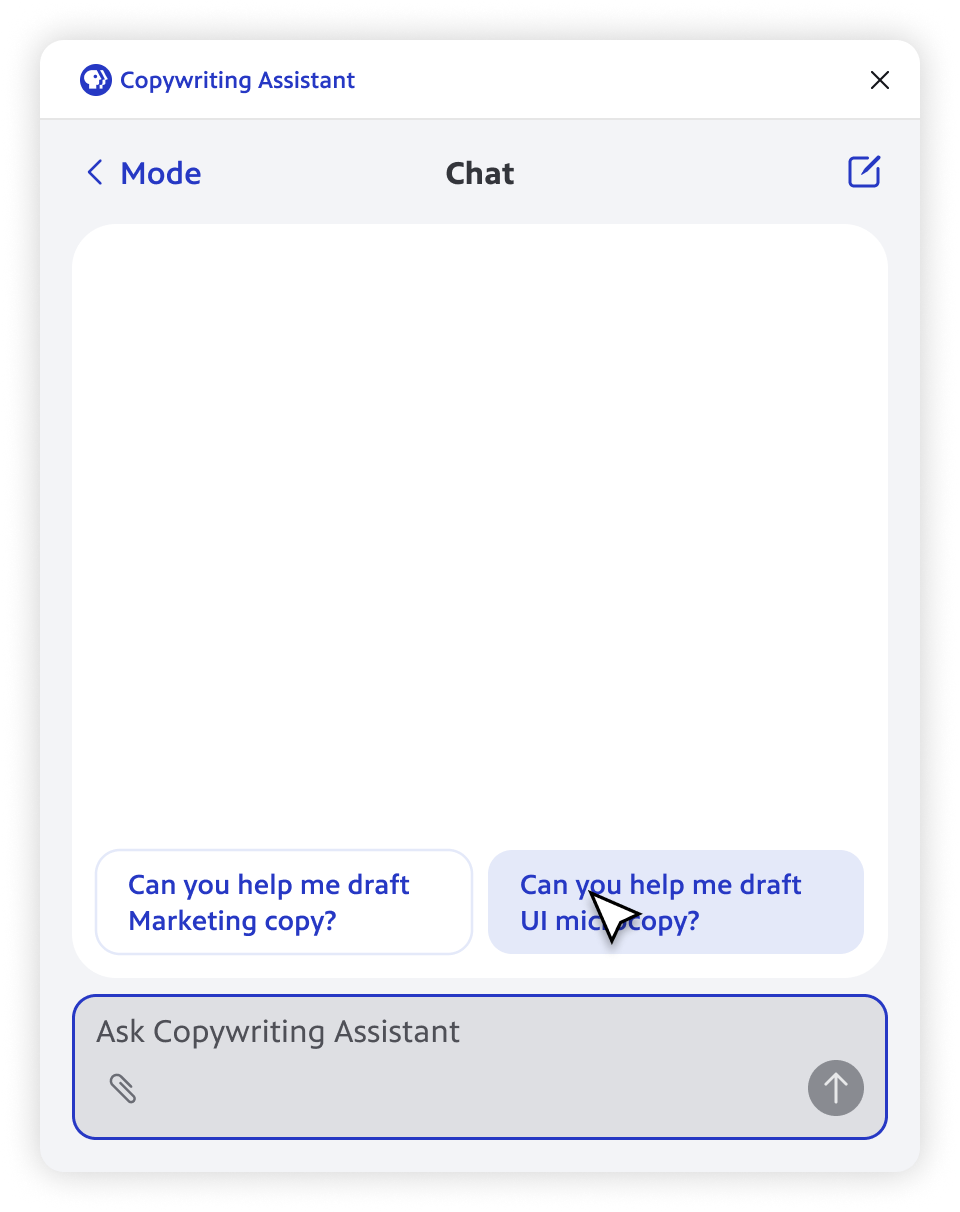
Pre-set Prompts for Faster, Better Results

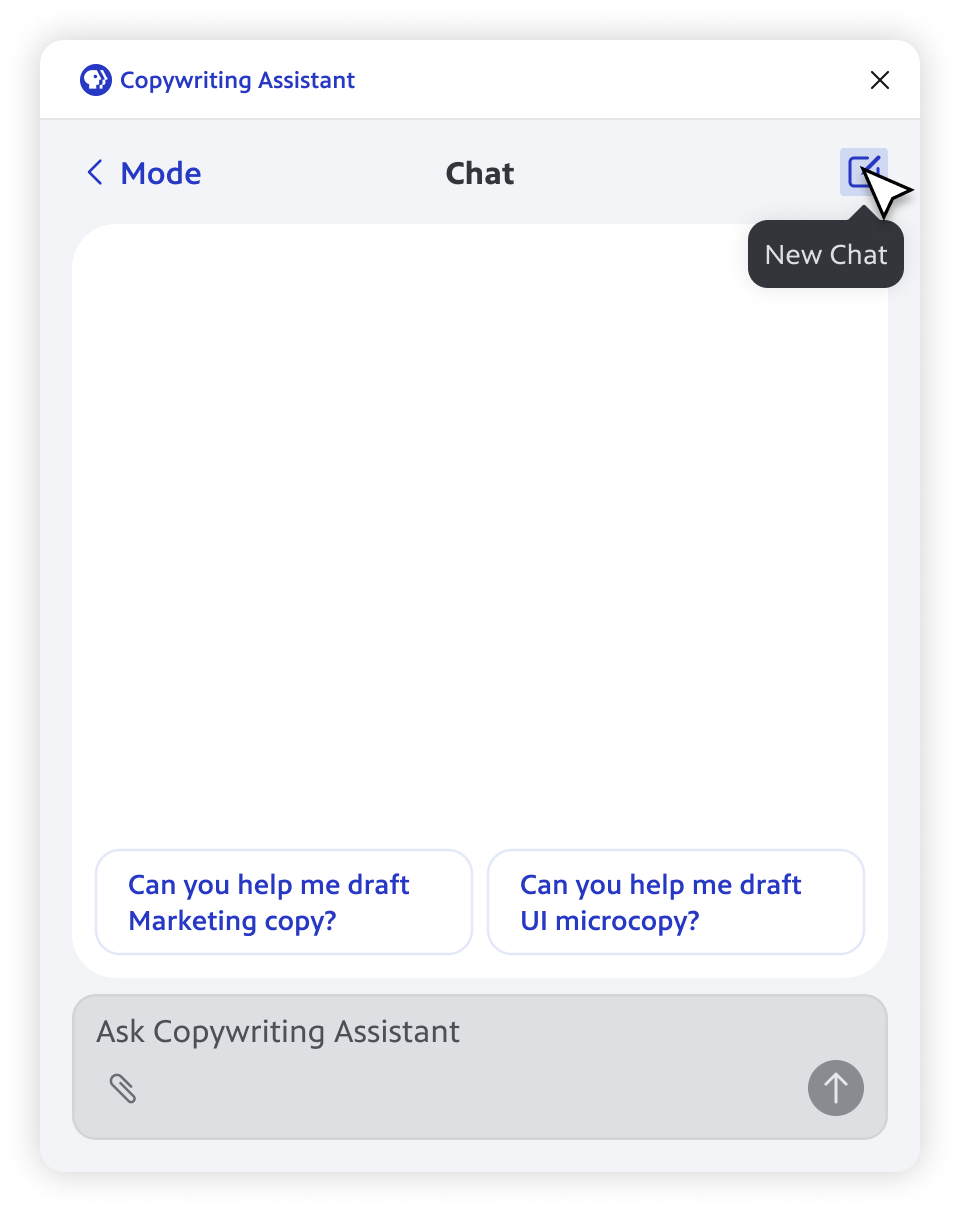
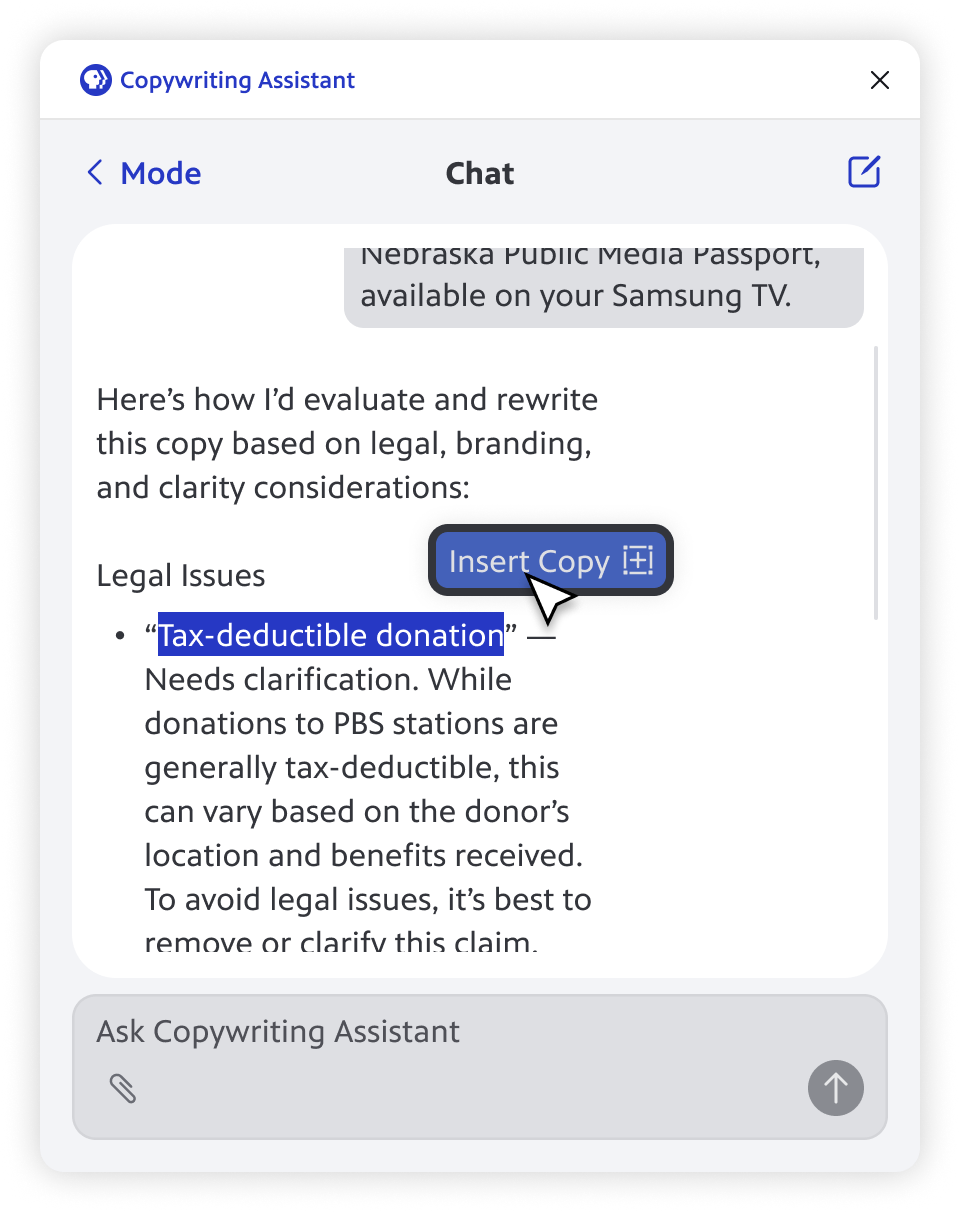
Quickly interact with the Assistant with pre-set prompts, while its follow-up questions ensure accurate and relevant results.

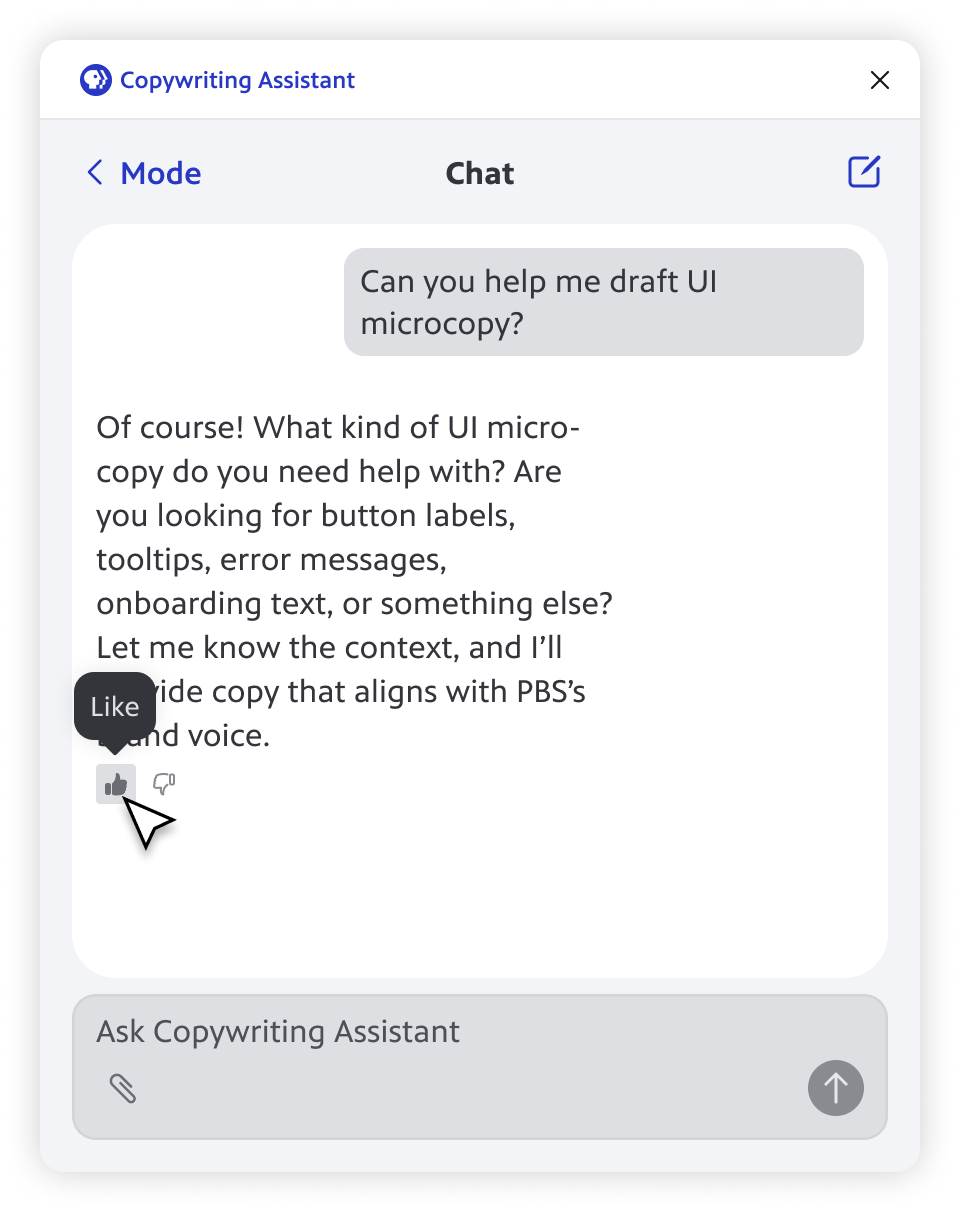
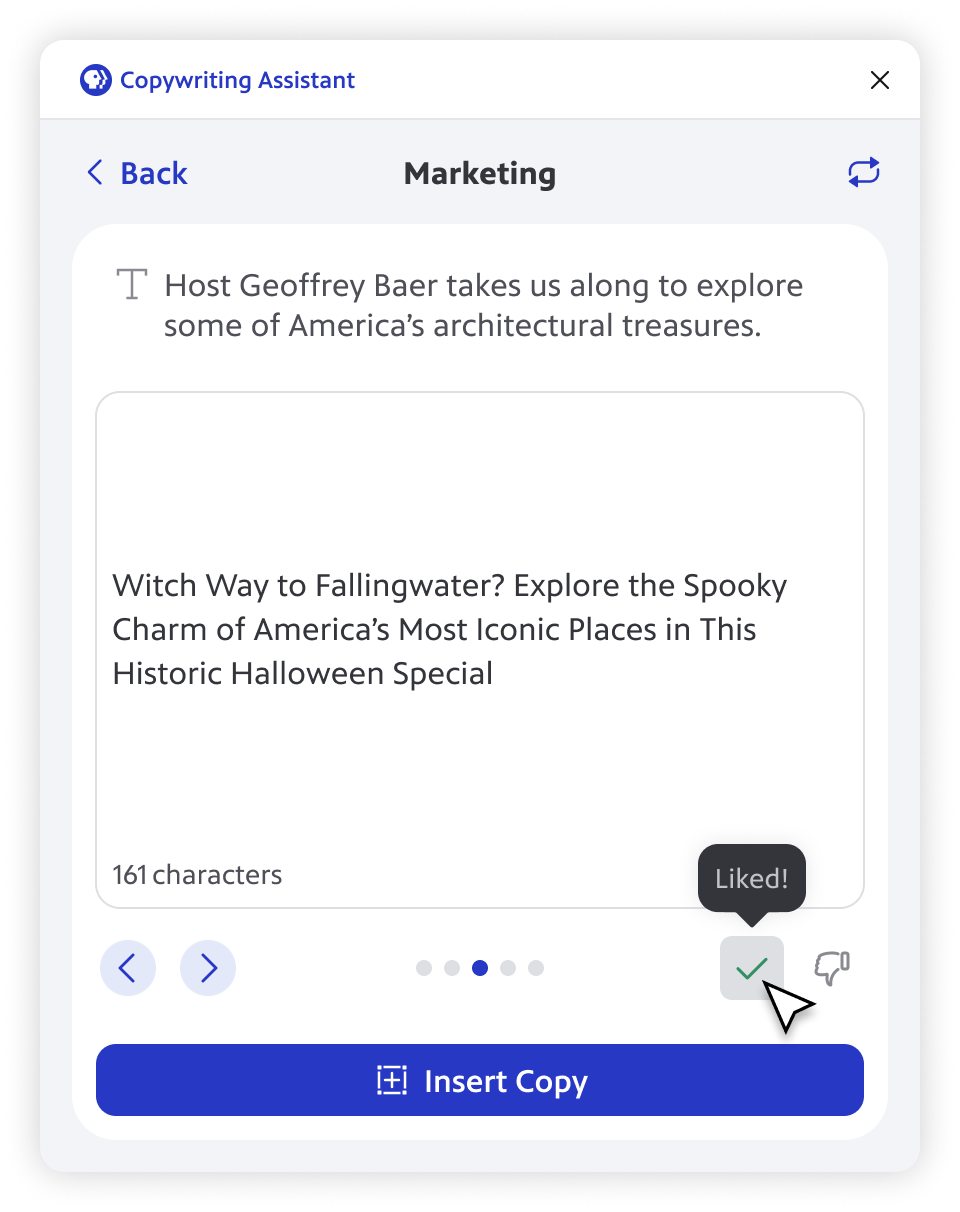
Explicit Feedback for Continuous Product Evolution

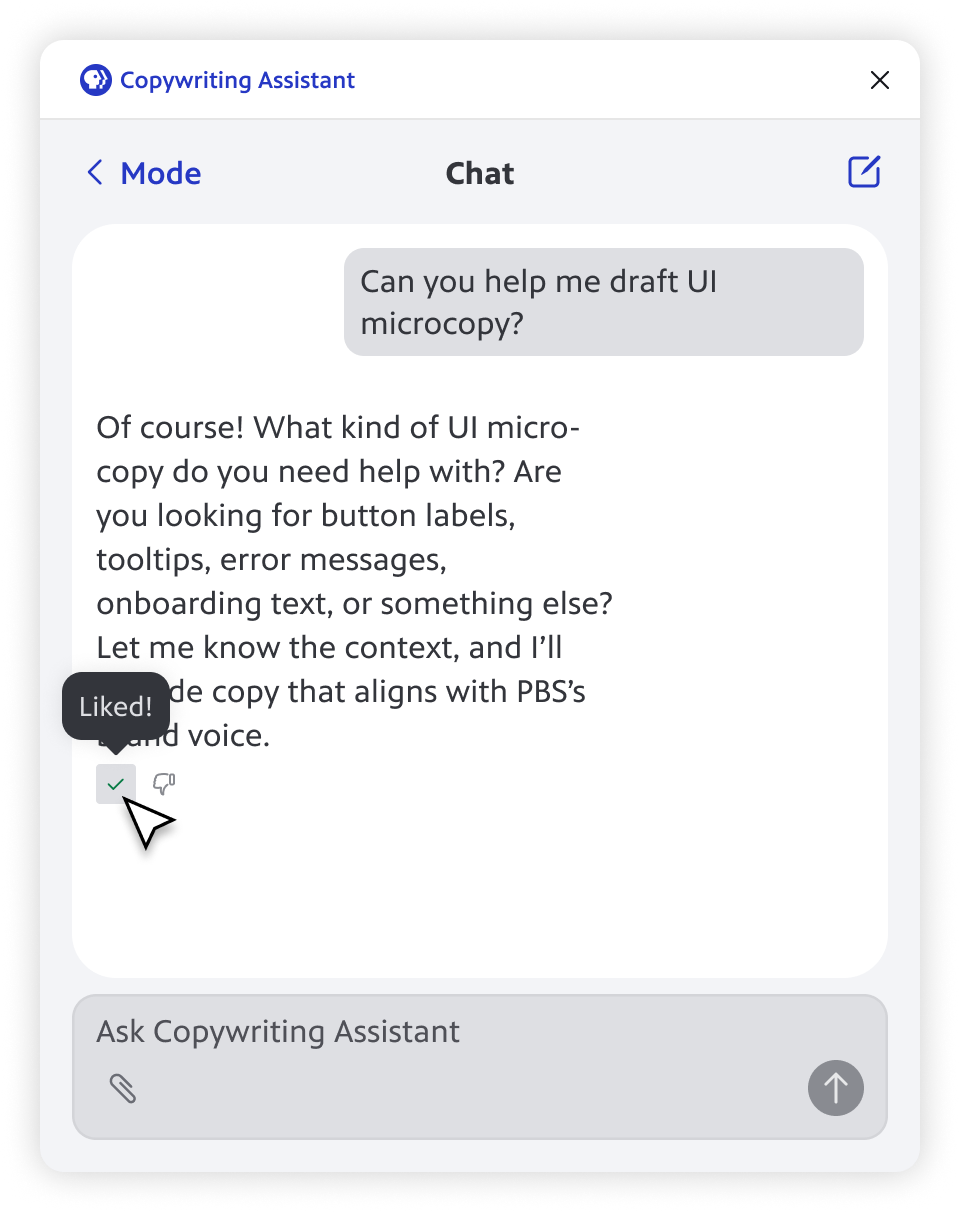
Users provide feedback on the Assistant’s suggestions, helping it improve over time, stay relevant, and build trust over time.

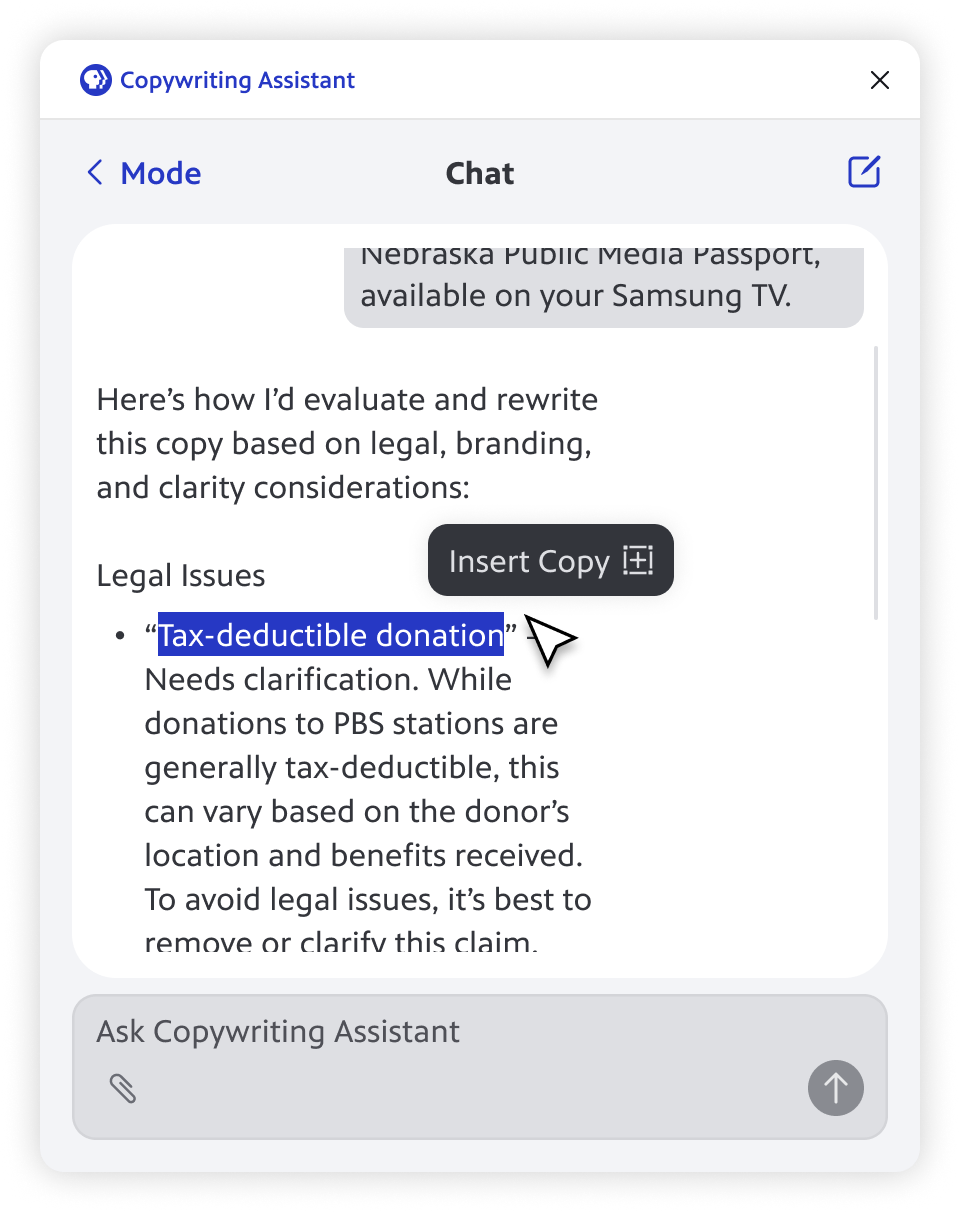
Native Figma Experience

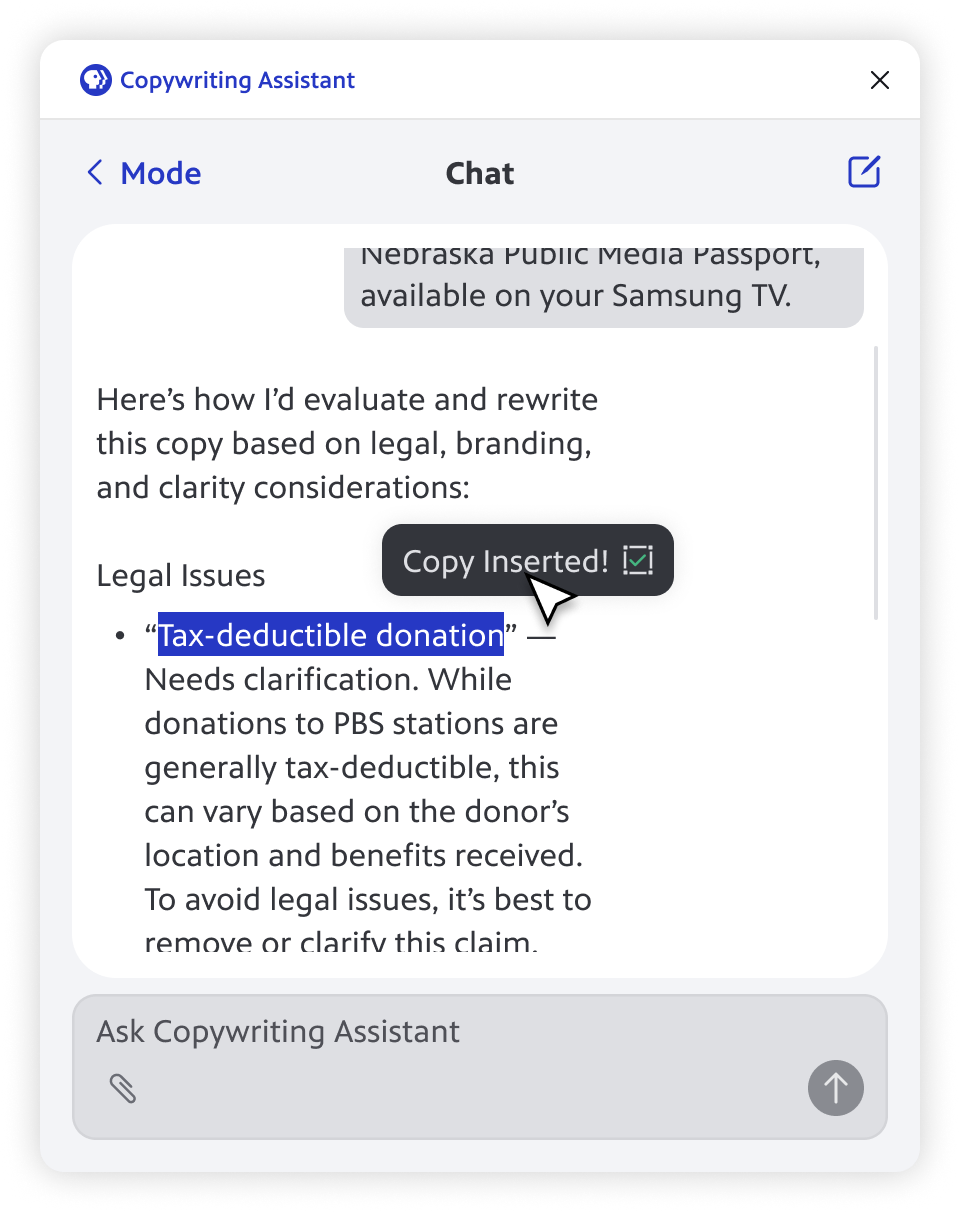
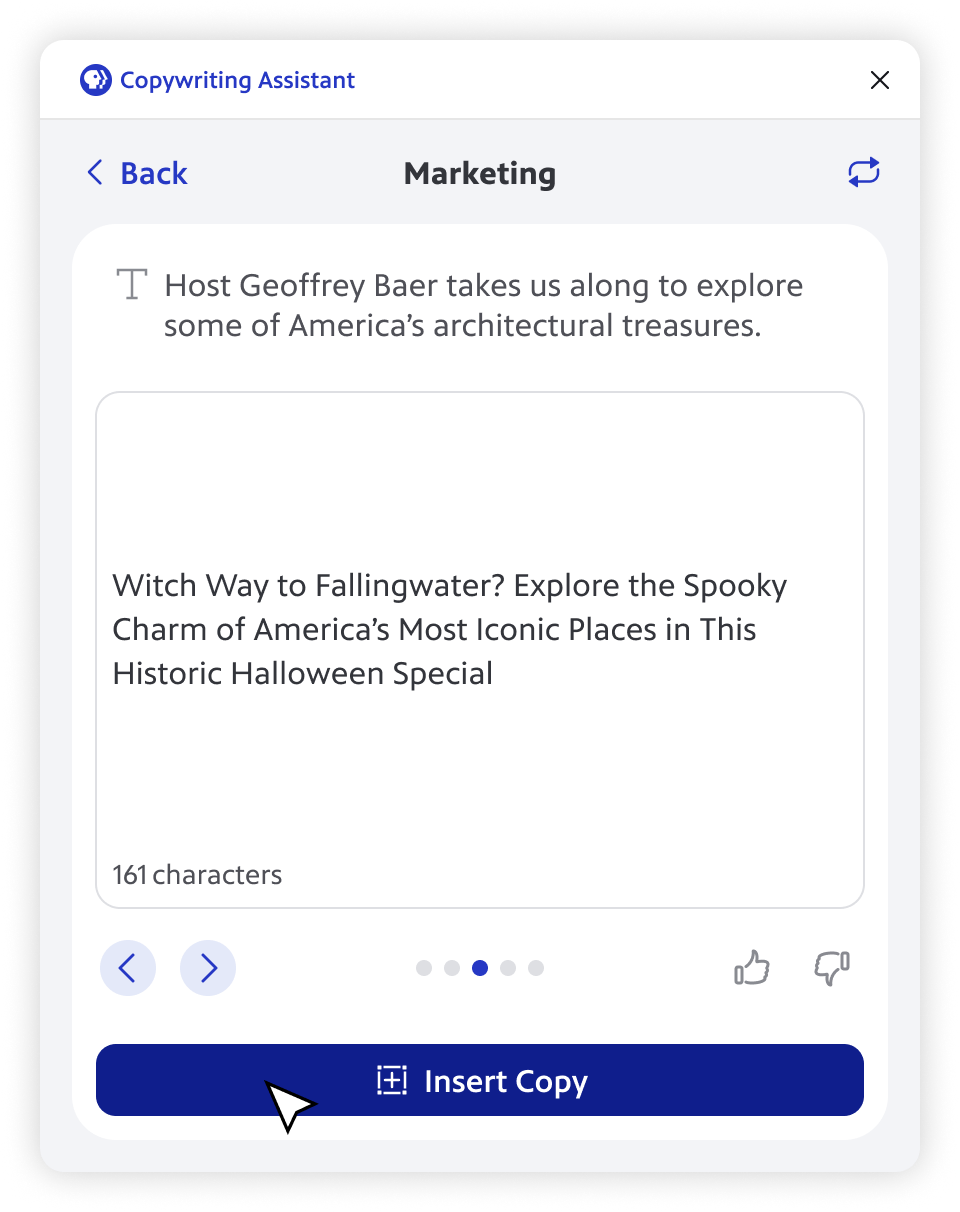
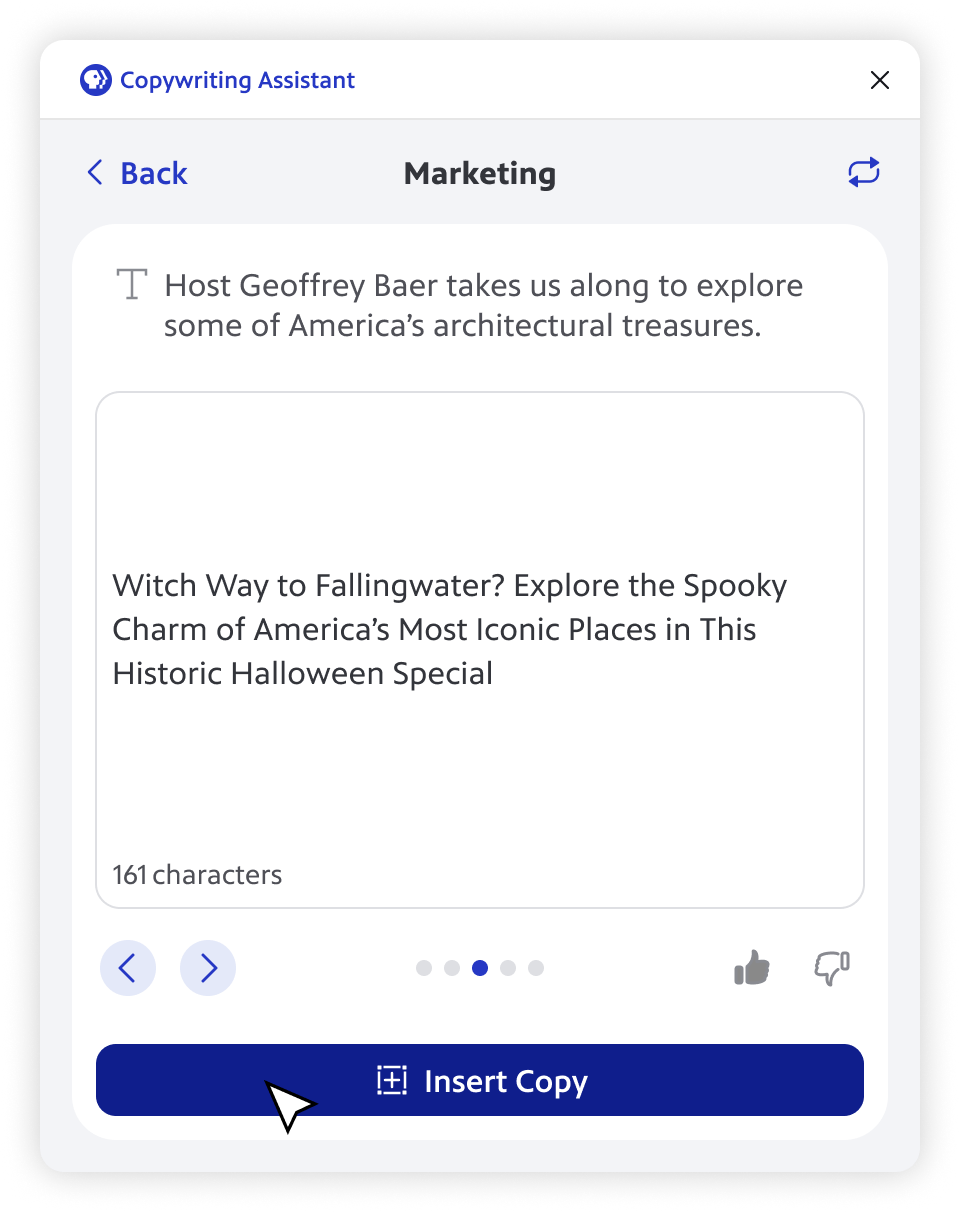
The plugin uses the Figma API to send copy straight into text layers, removing friction and helping designers rapidly test new suggestions.

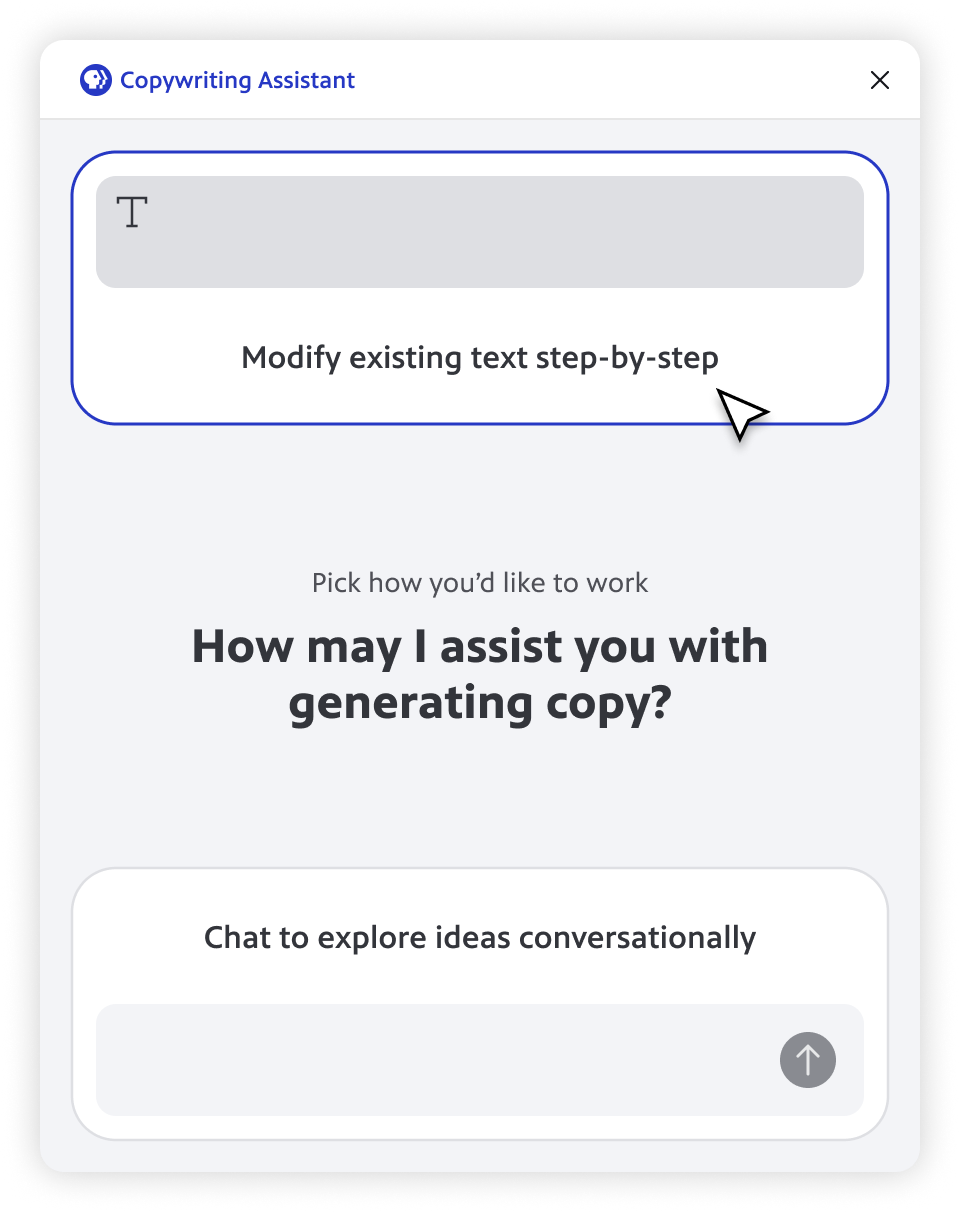
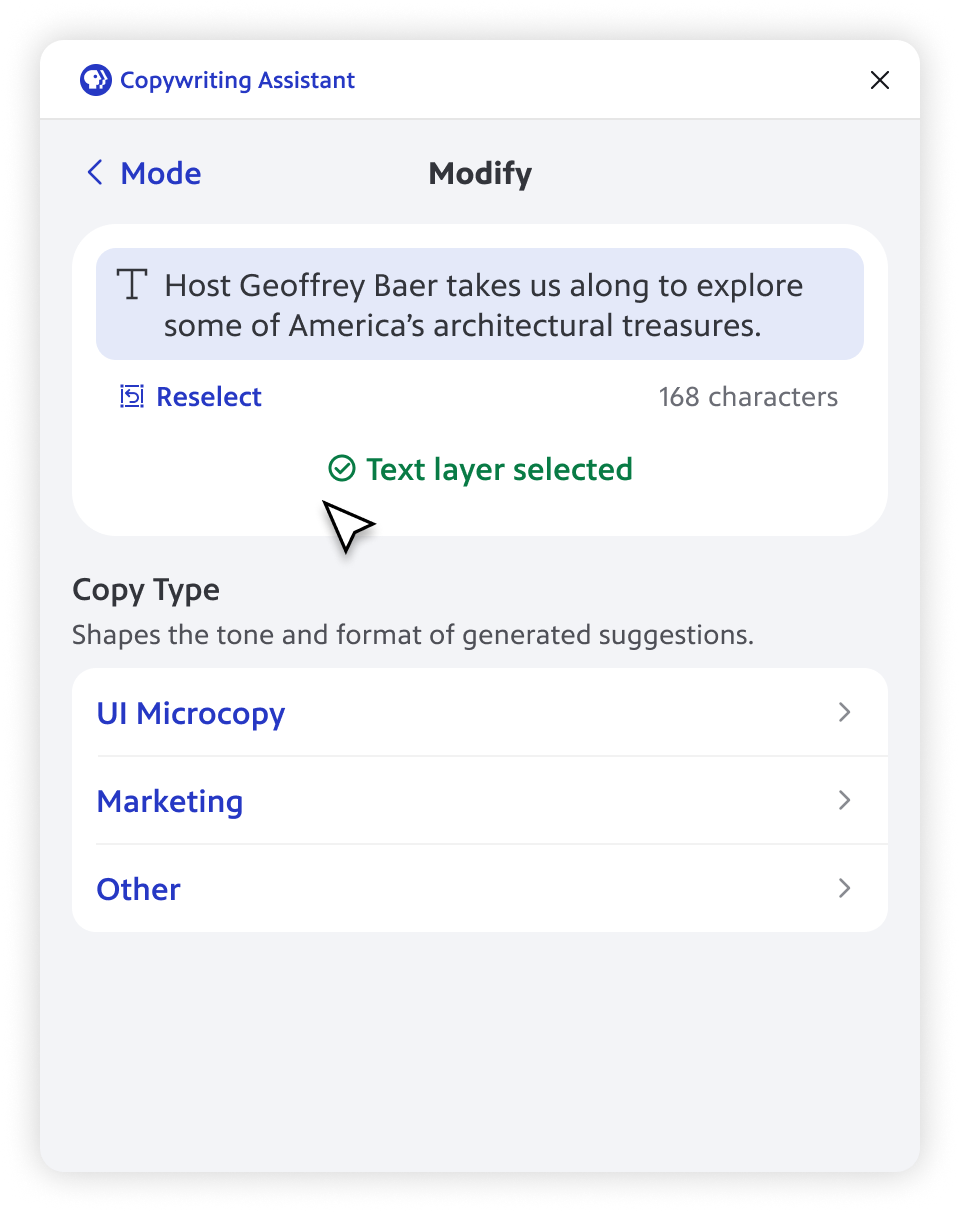
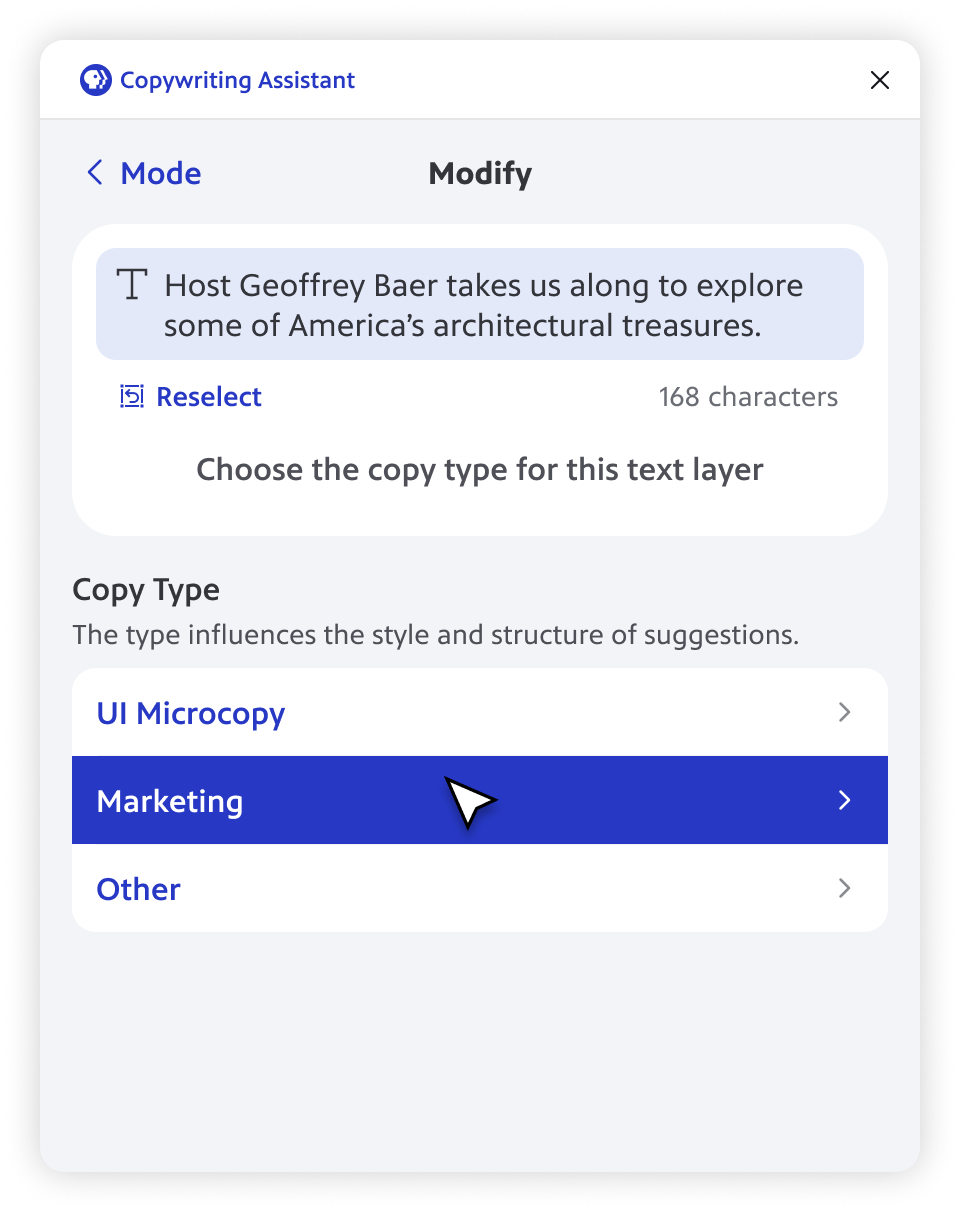
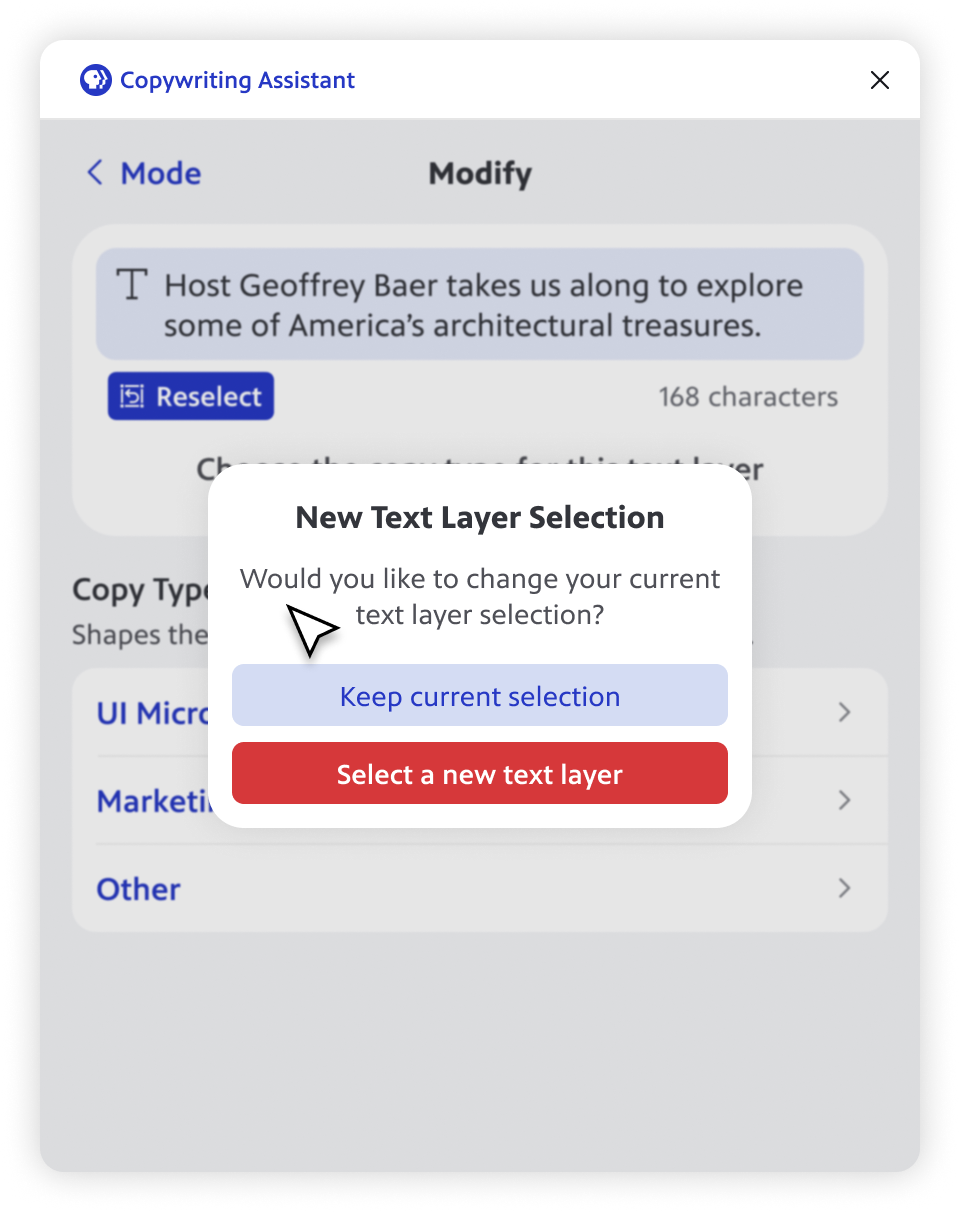
'Modify' Workflow Mode

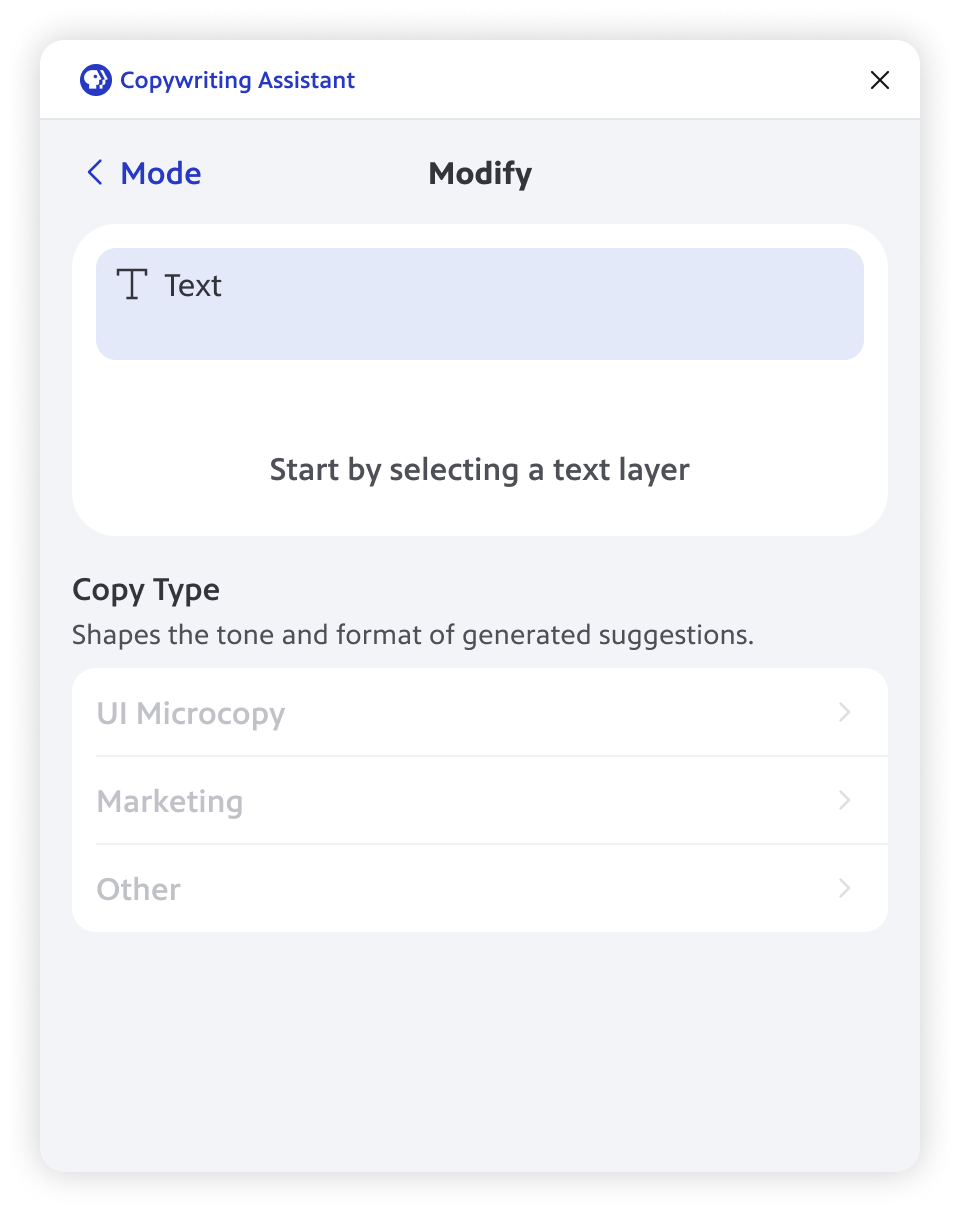
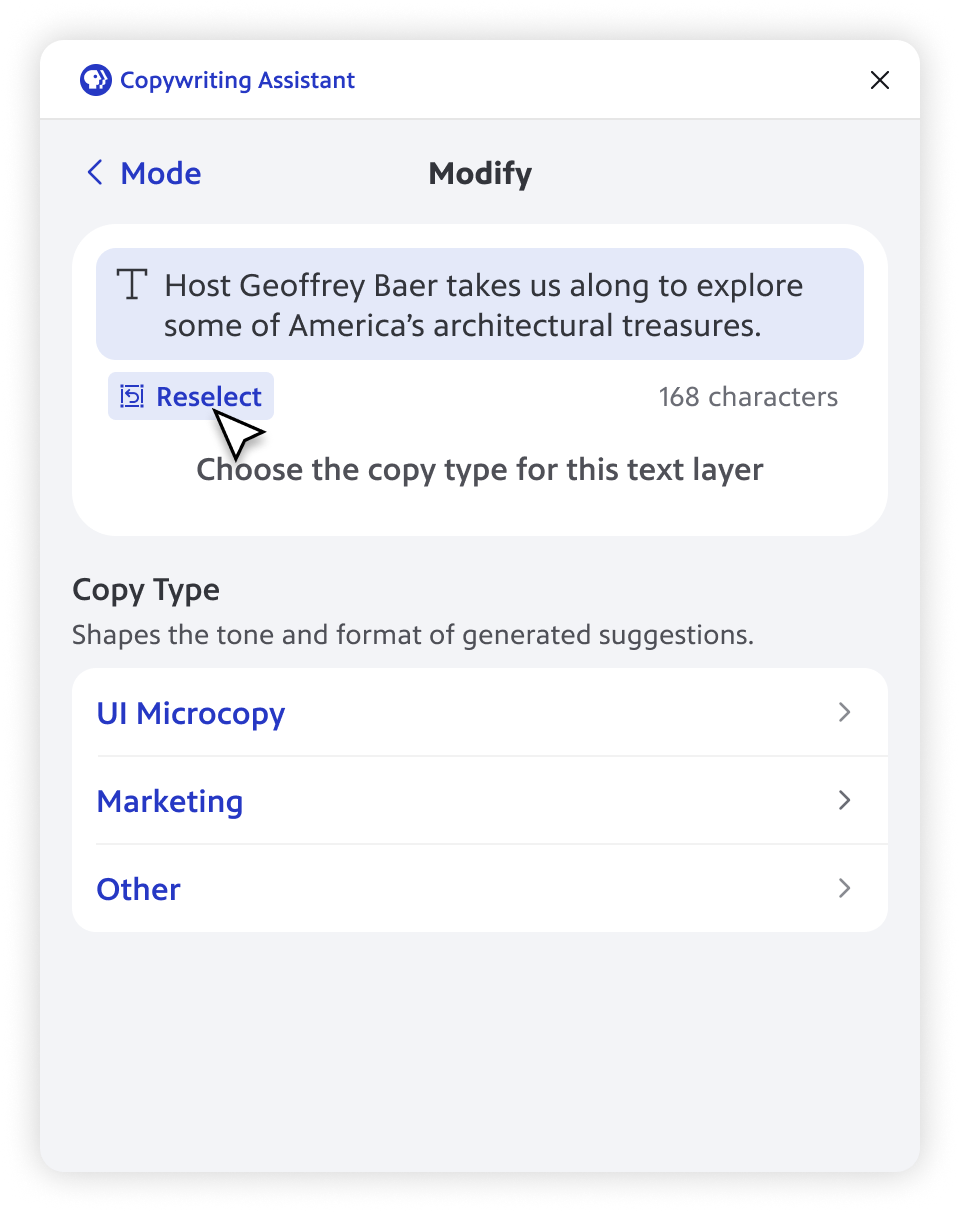
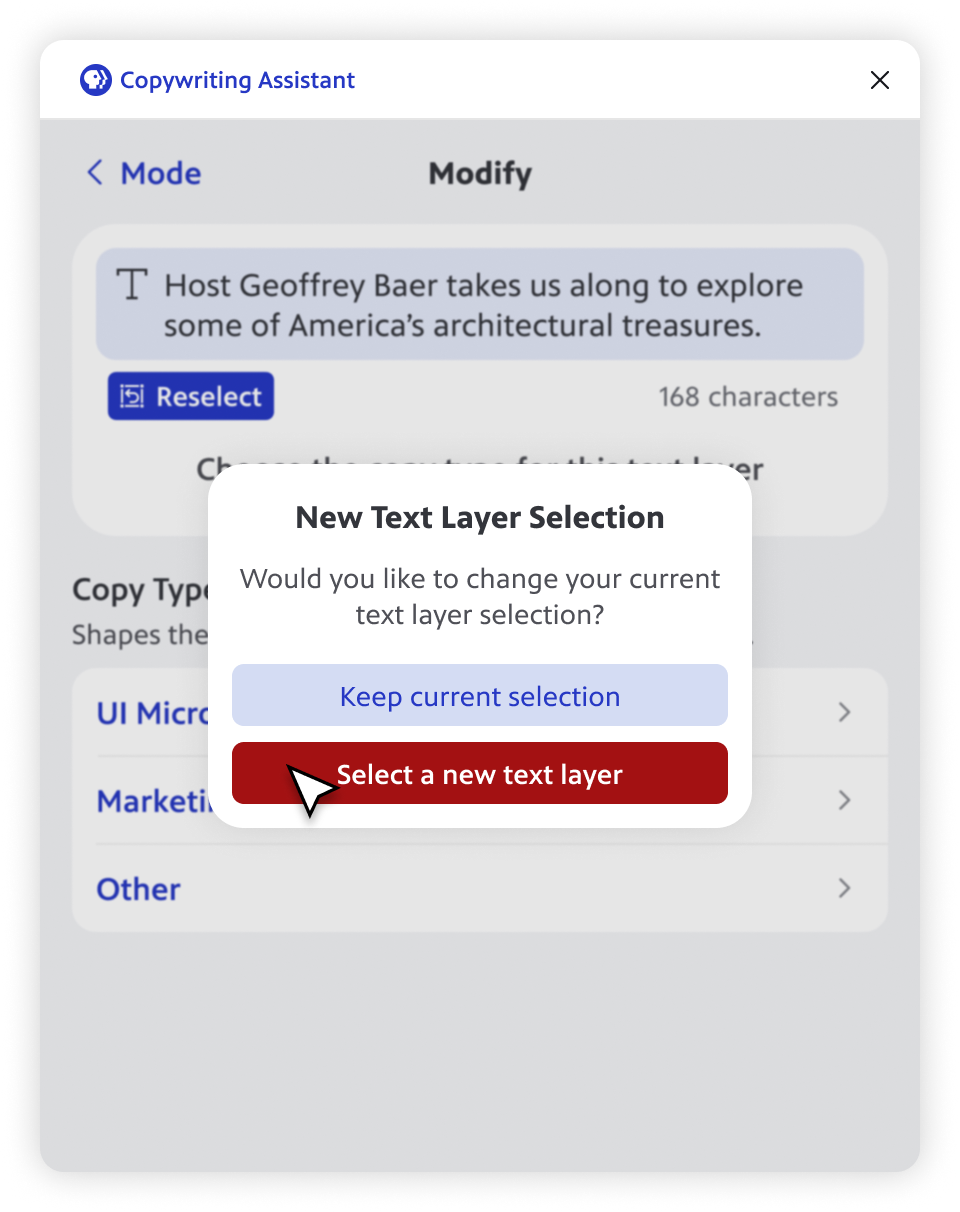
A hybrid of guided steps and conversational input, the Modify mode let designers refine suggestions and supply context for more relevant results.

Despite strong enthusiasm from the Digital Design team for a workflow-based interaction design, the Innovation Team determined that the engineering effort outweighed the benefits.

Adaptive Copy Editing

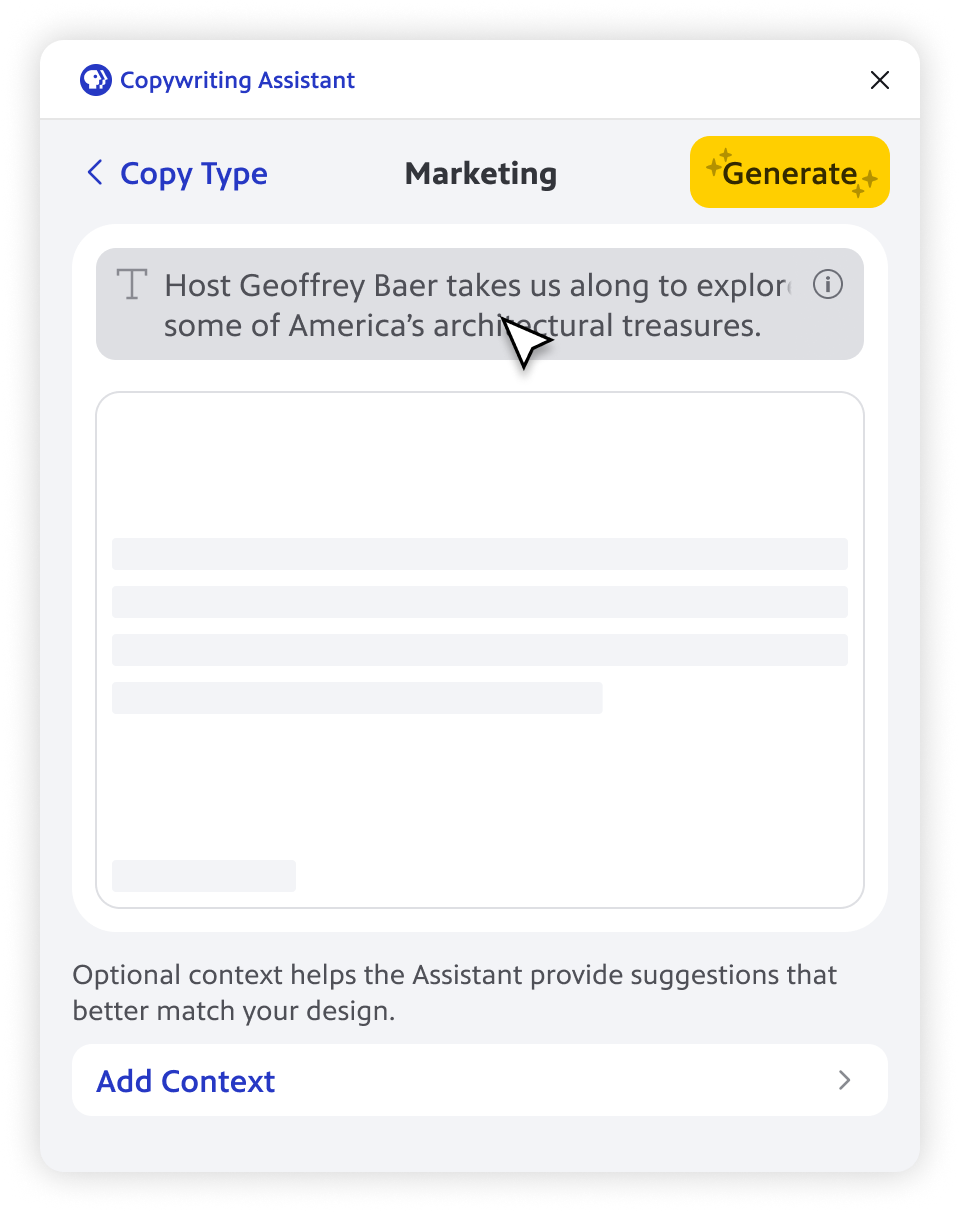
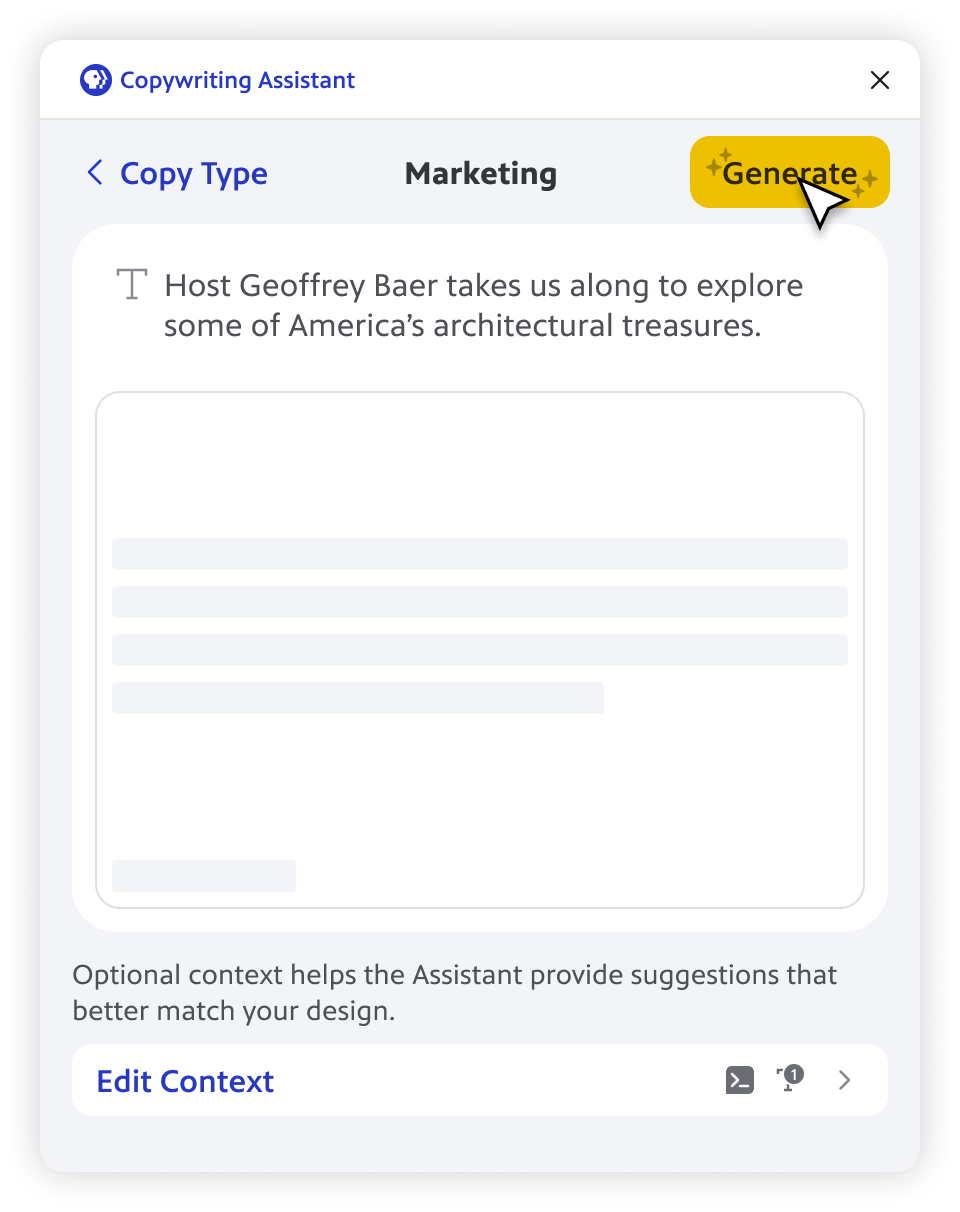
By identifying the text layer and its type, the Assistant ensures copy suggestions stay on-brand and fit the intended use case.

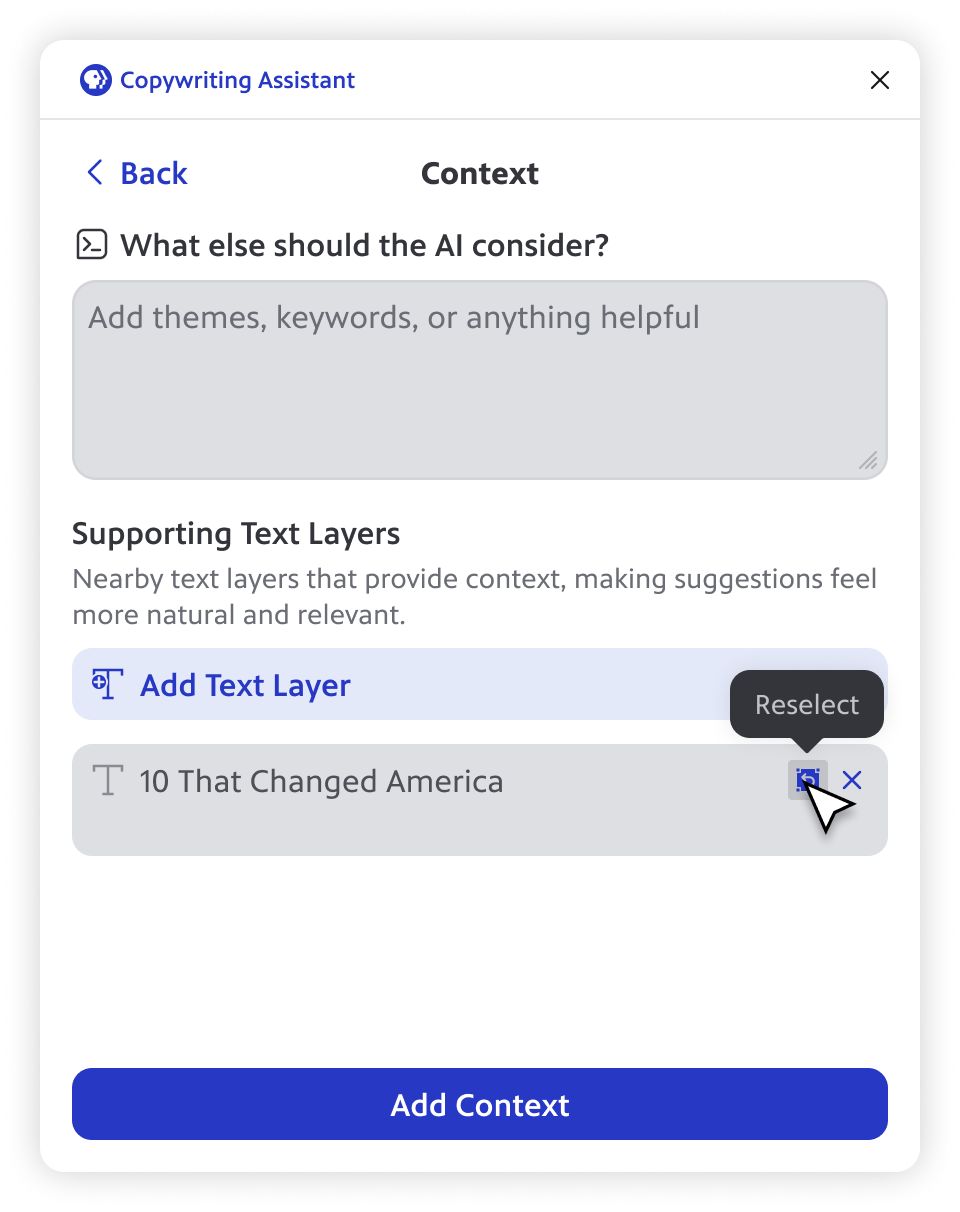
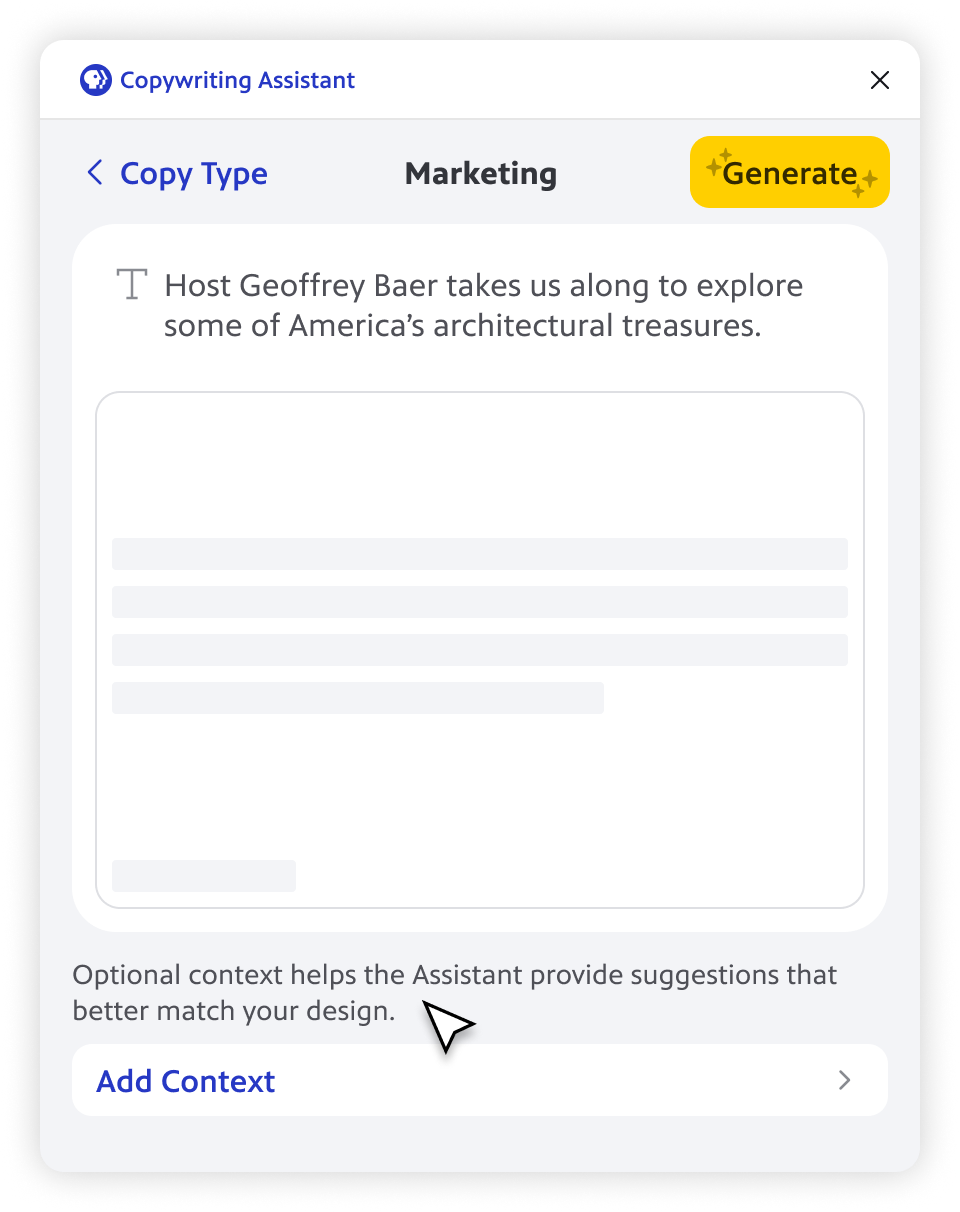
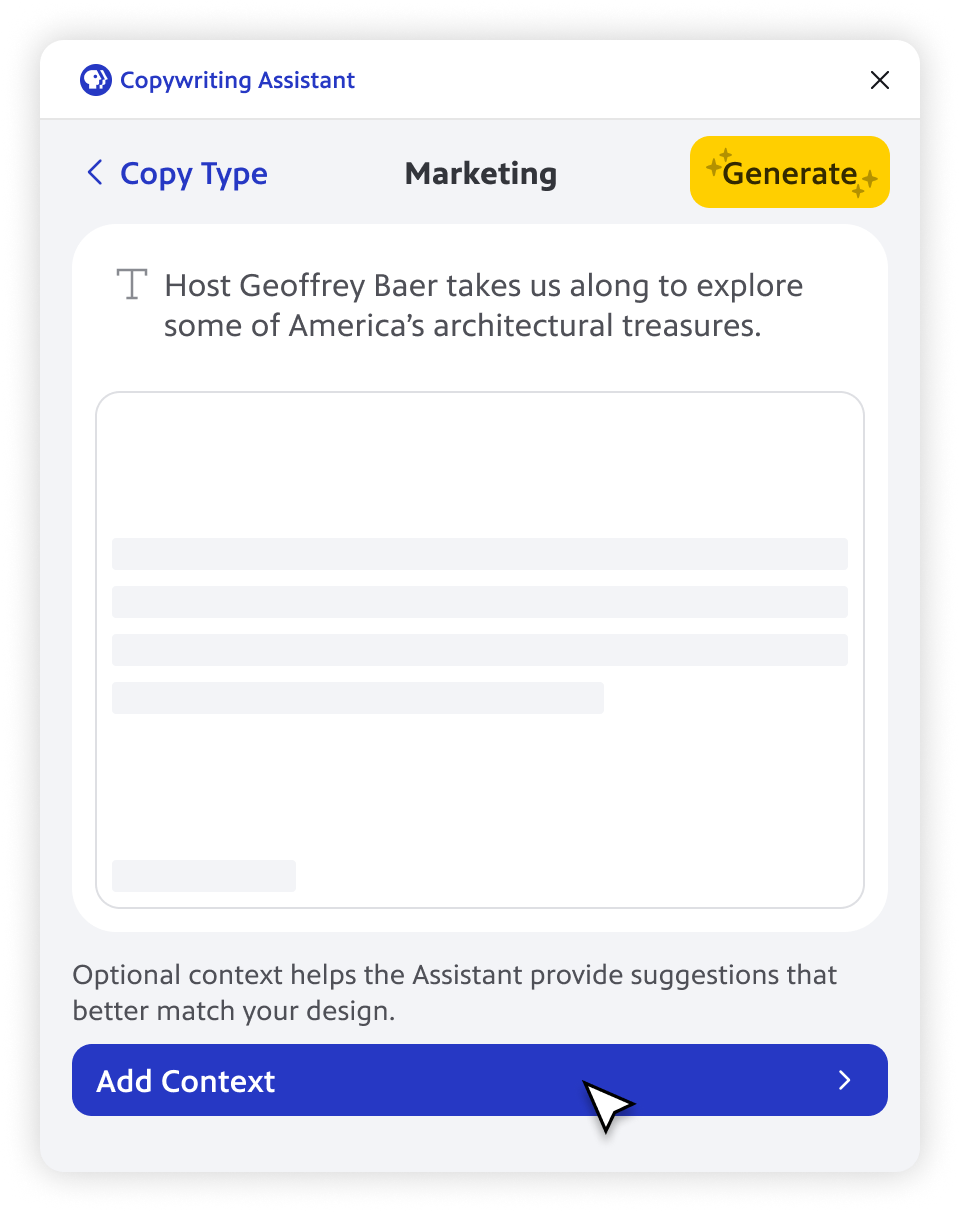
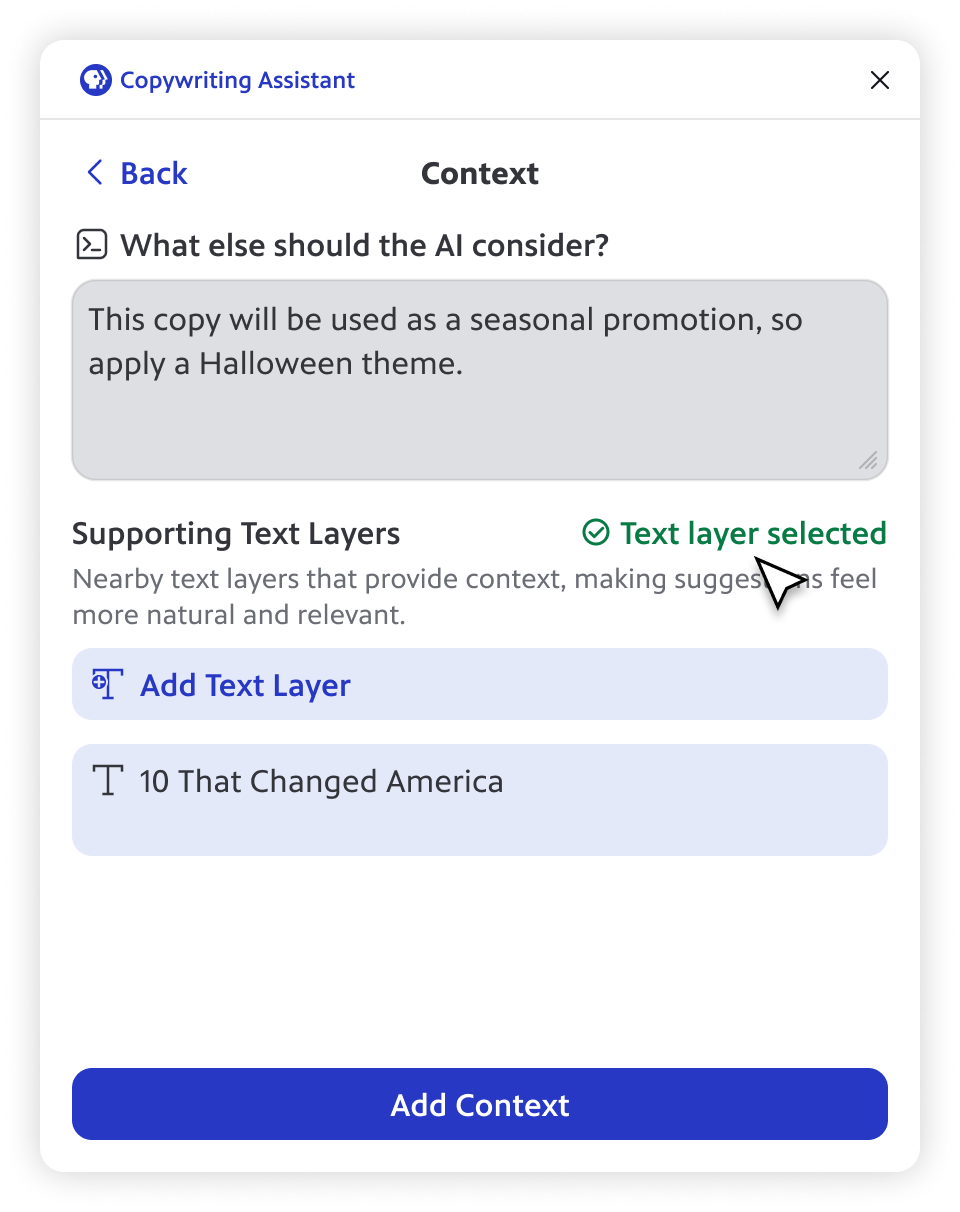
Optional Context-Aware Generation

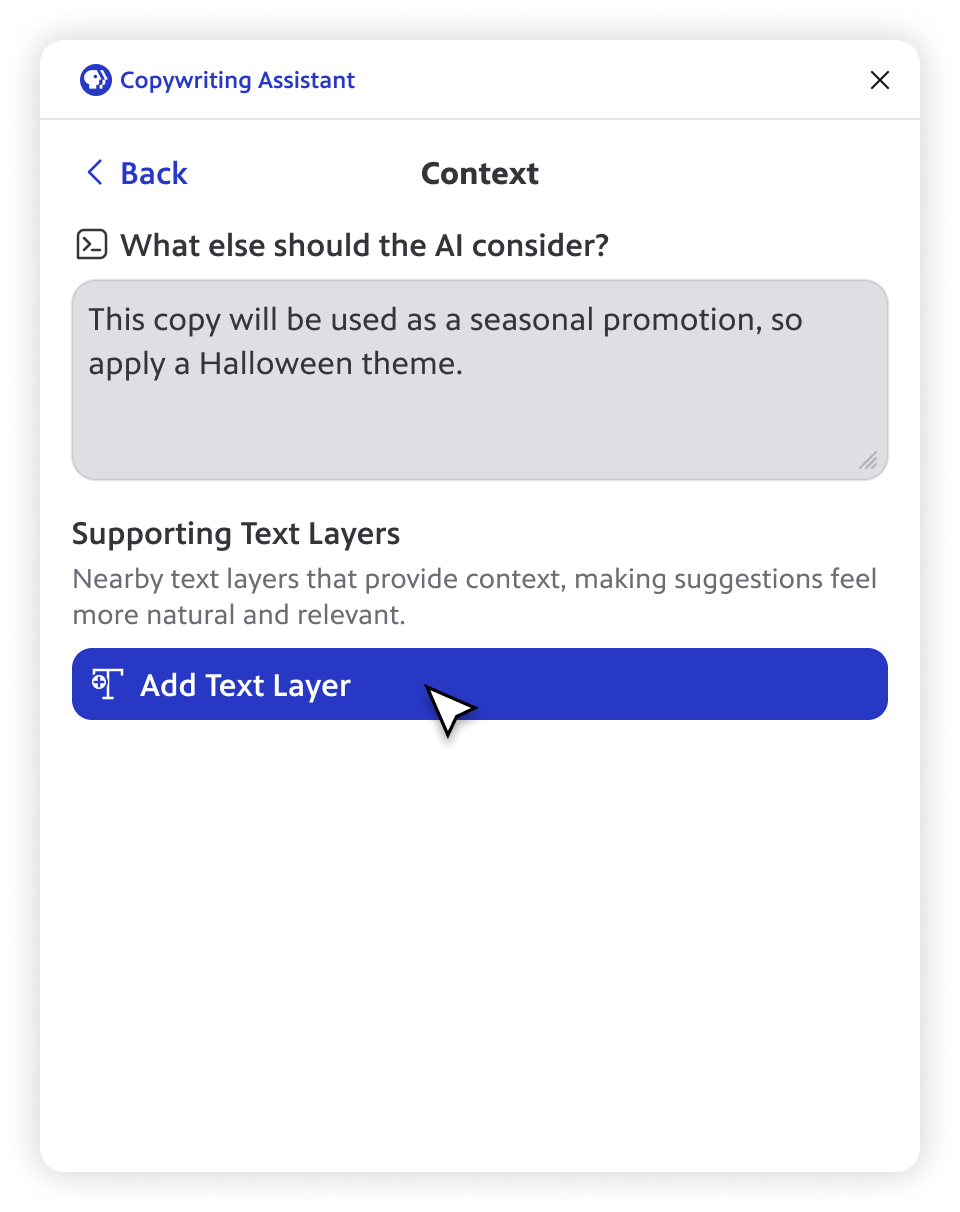
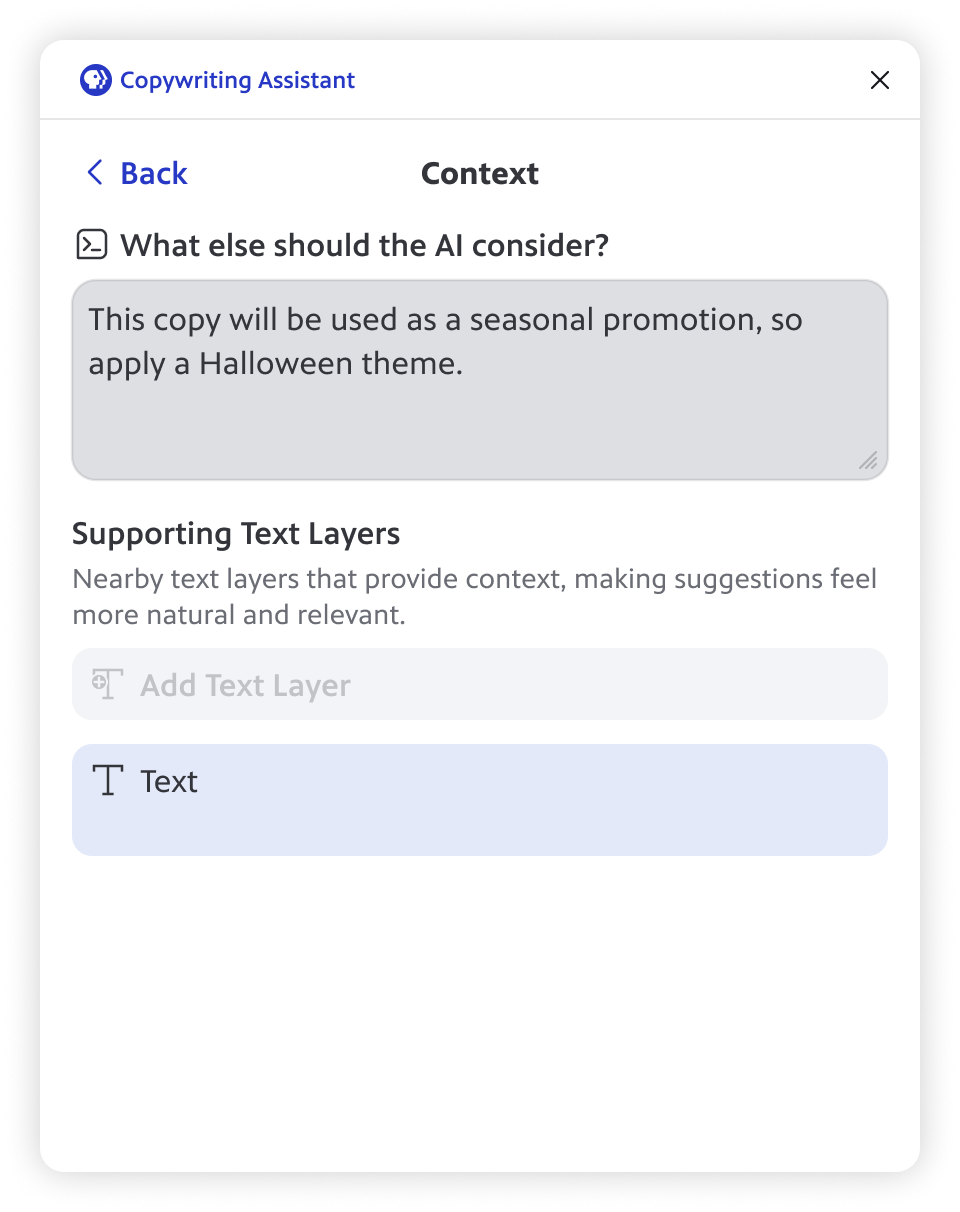
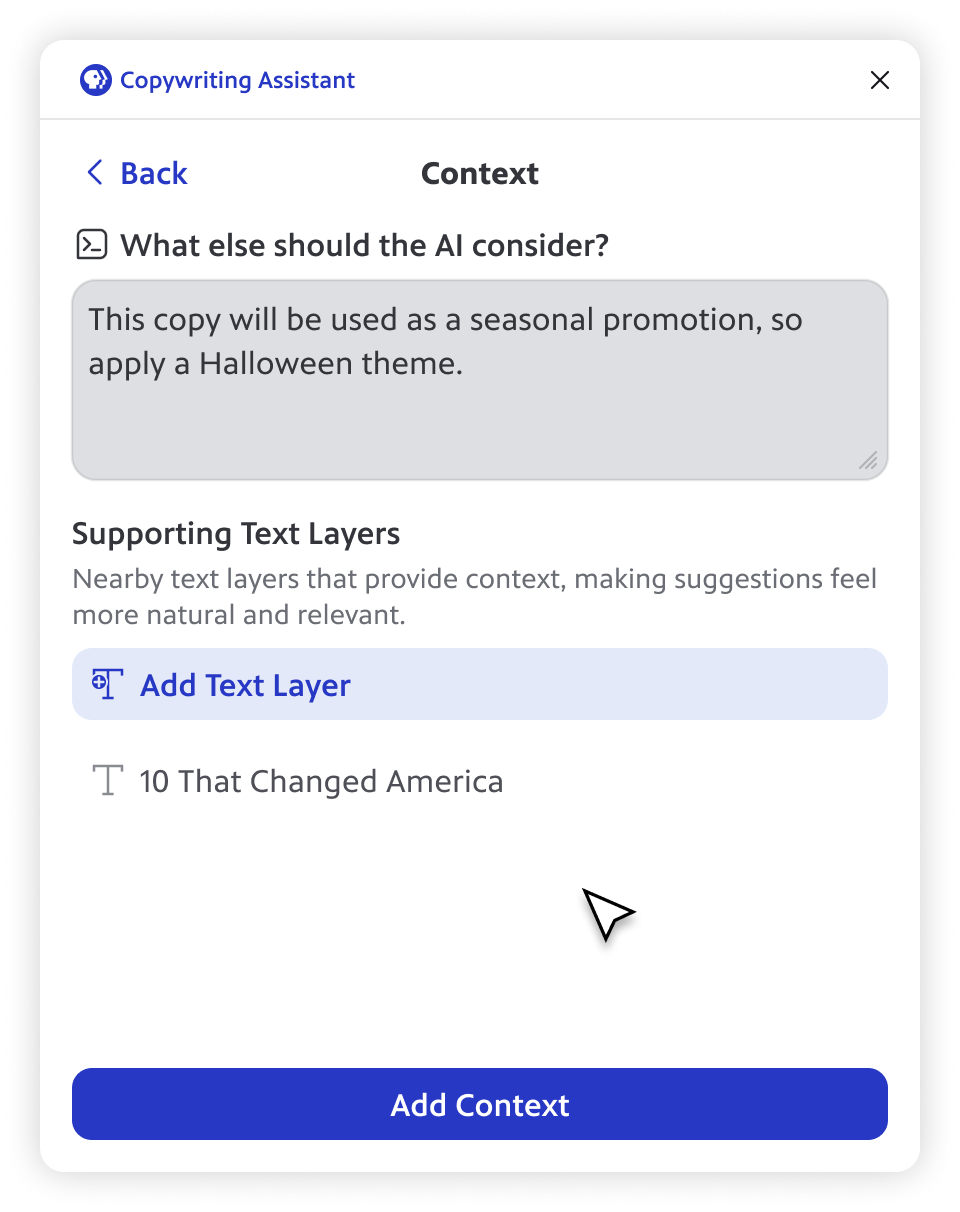
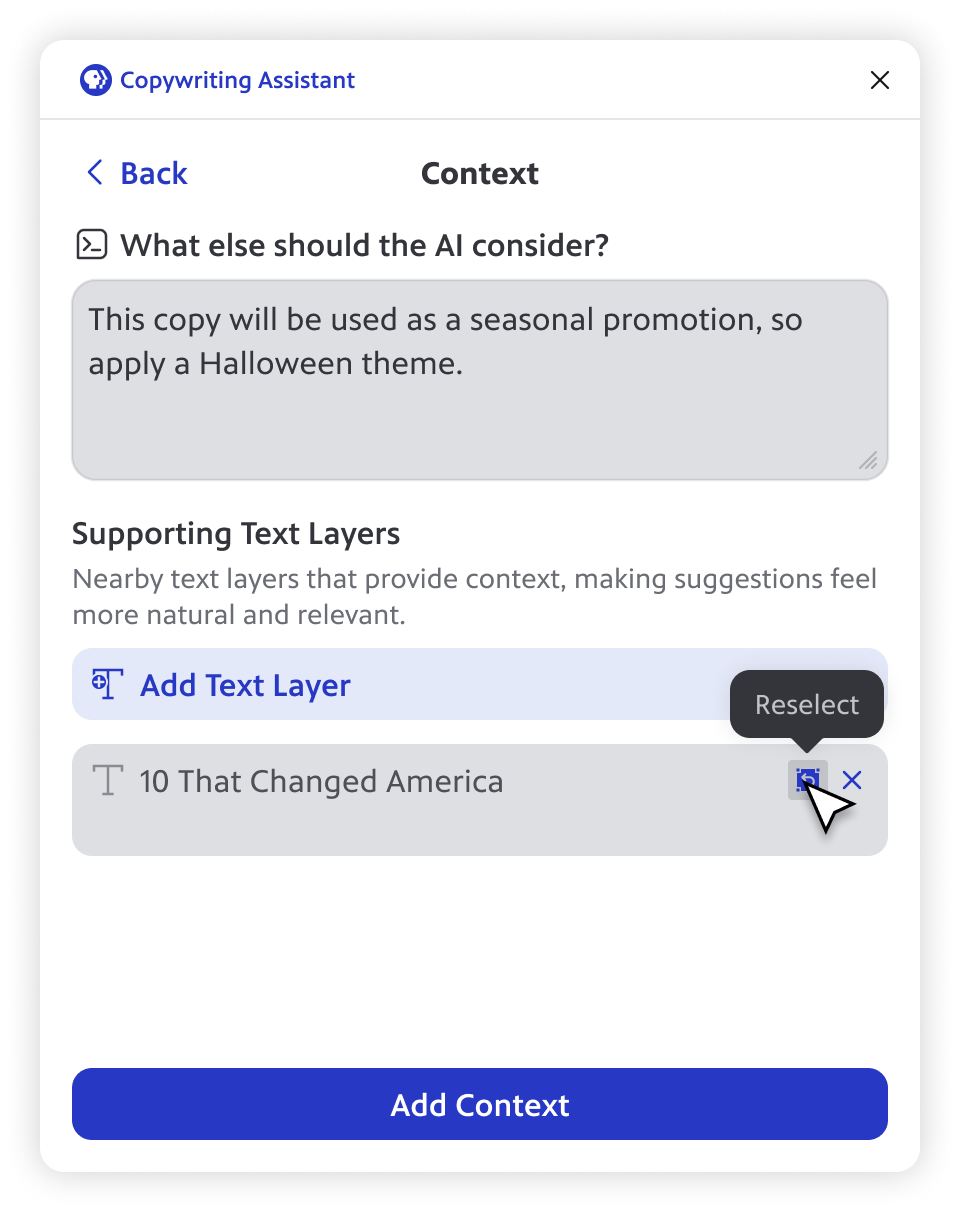
To improve copy relevance, designers can add context that helps guide the Assistant’s understanding before generating suggestions.

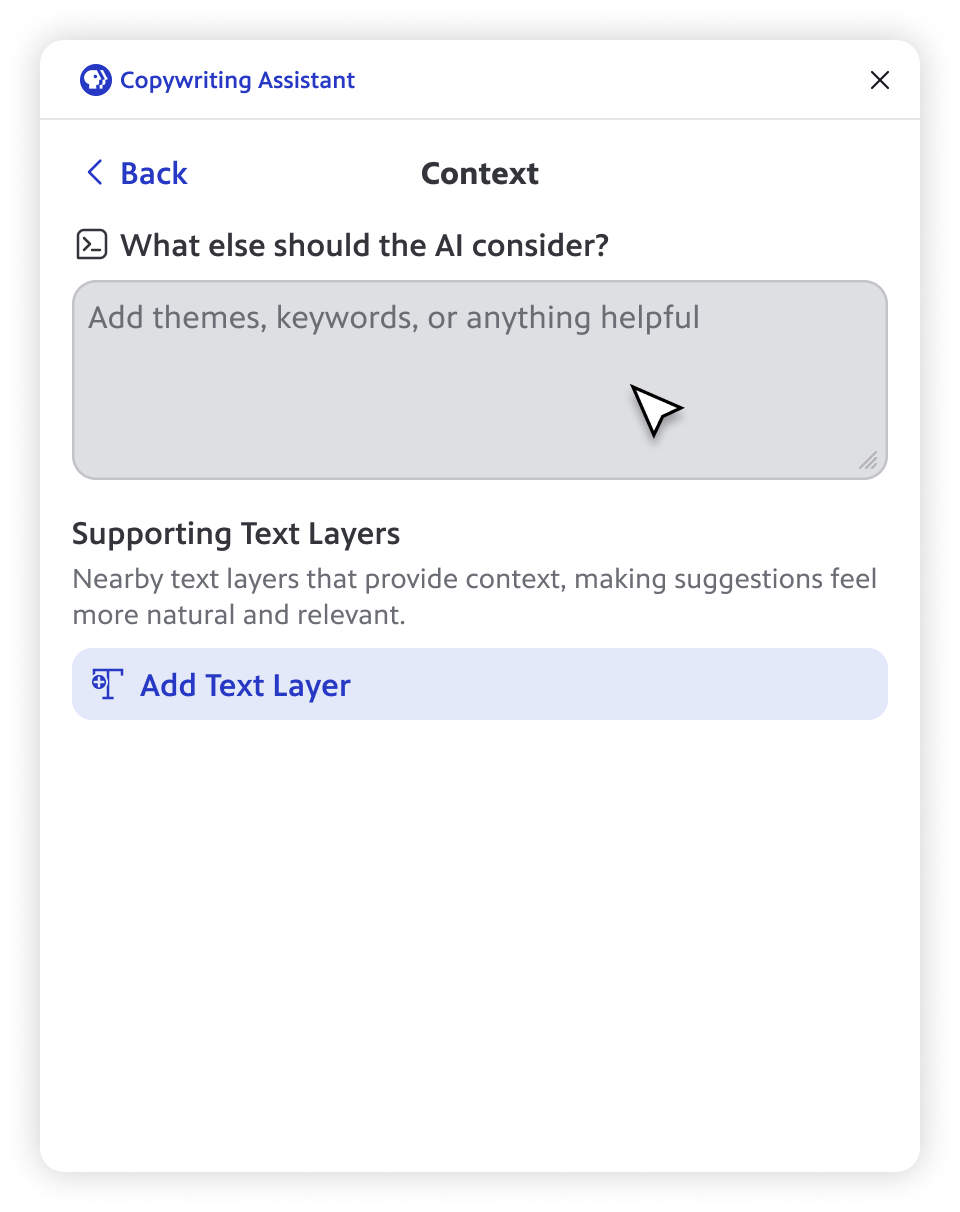
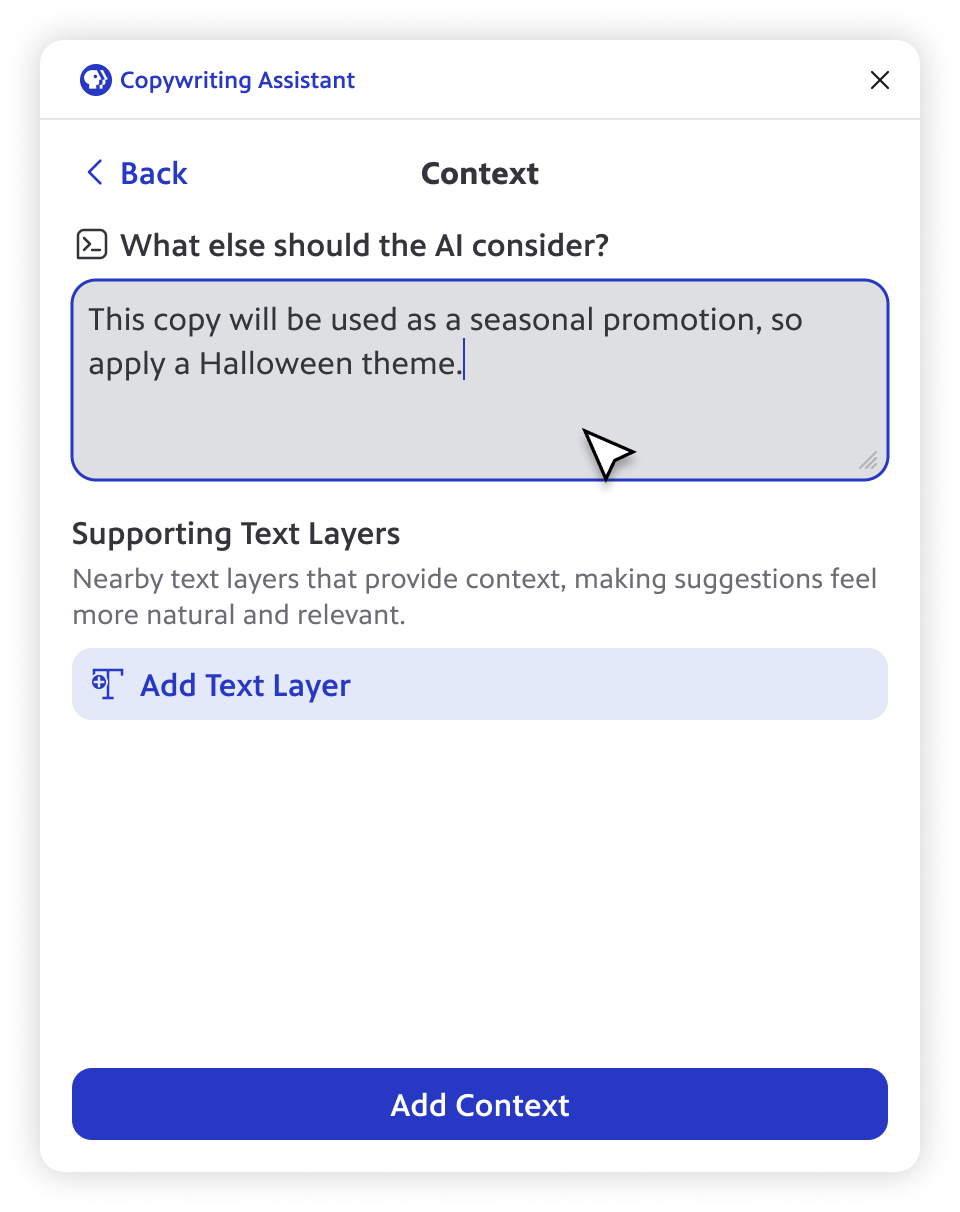
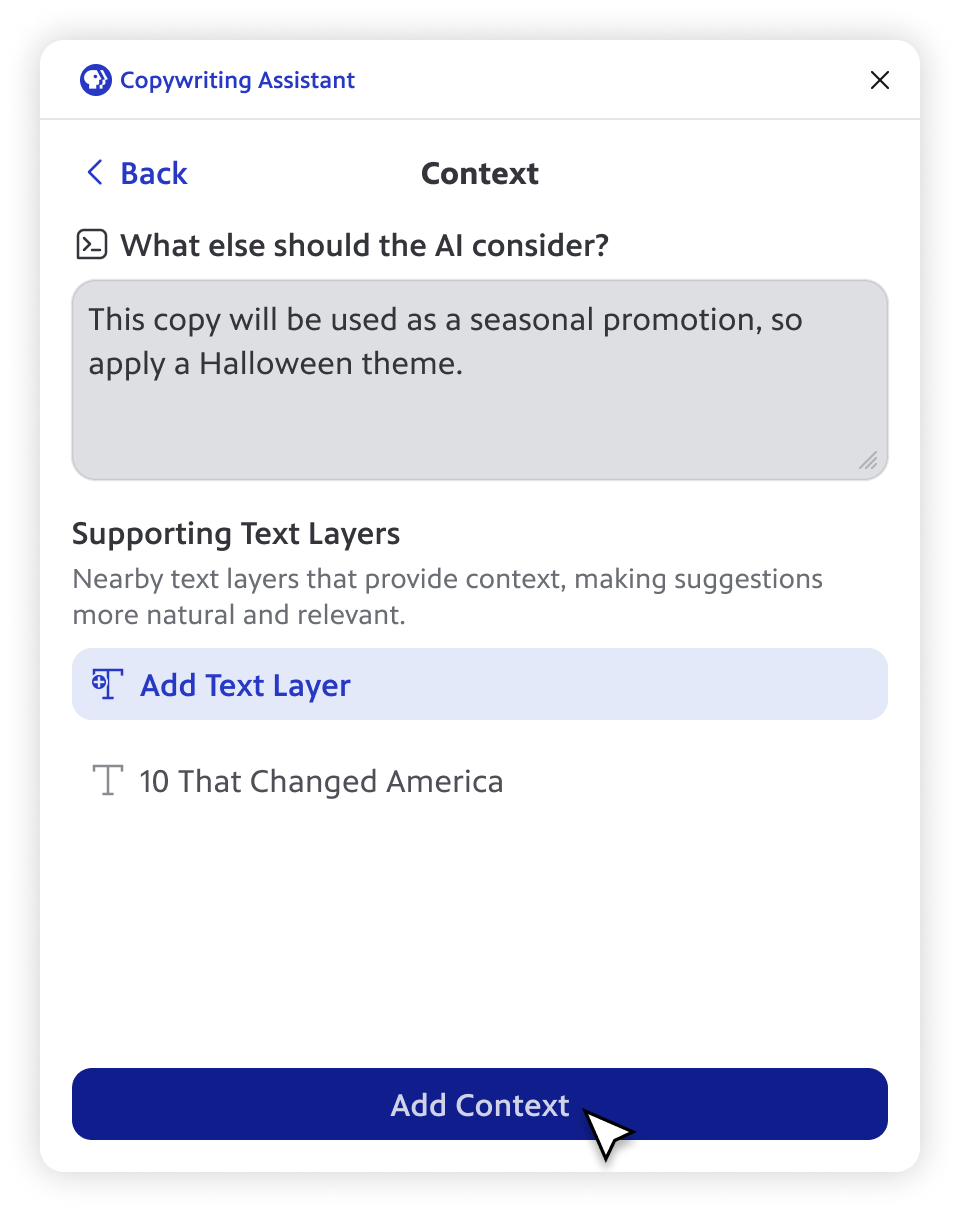
Multiple Methods for Adding Context

Designers can add context by typing additional information or including up to three nearby text layers as inspiration for the Assistant’s copy suggestions.

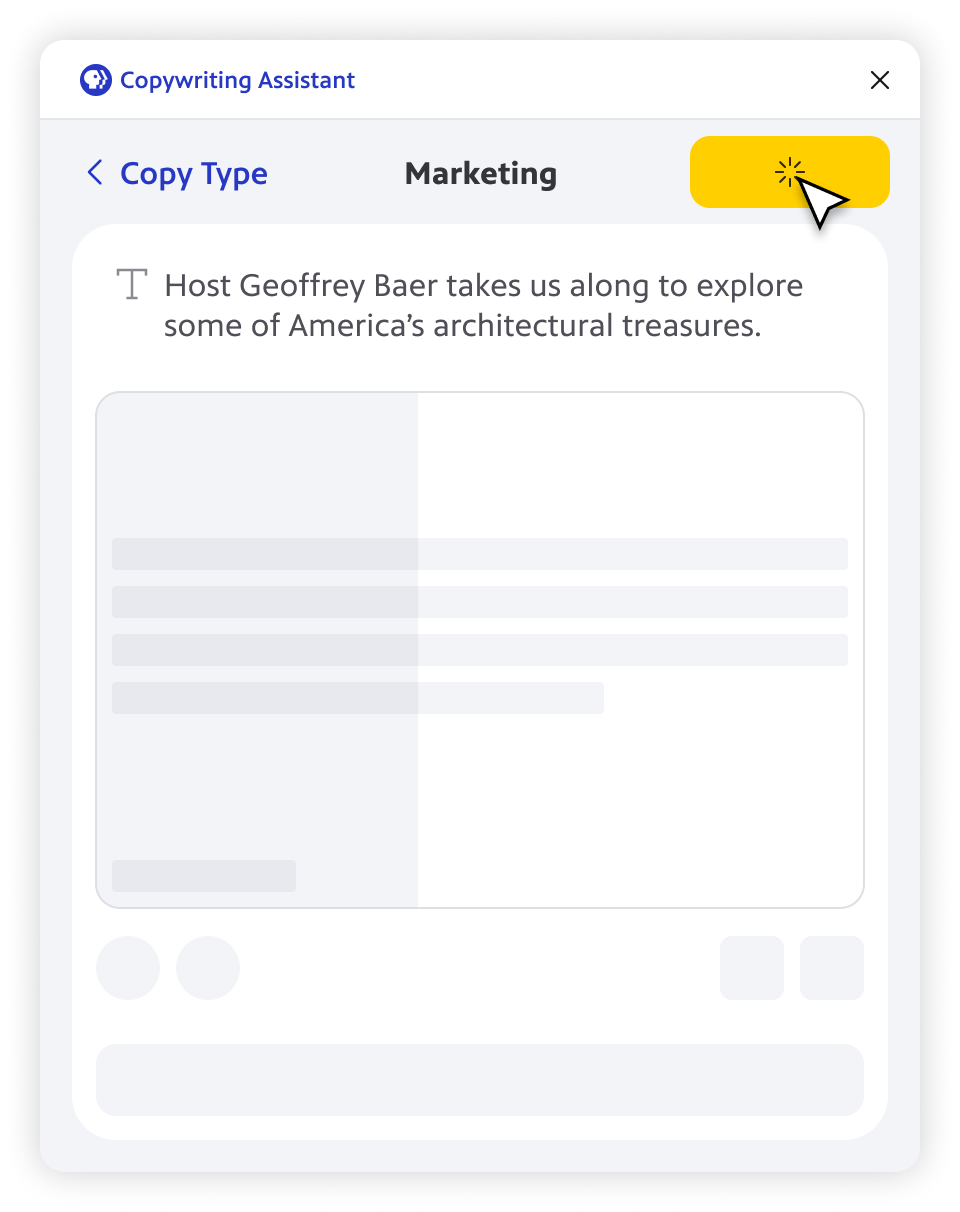
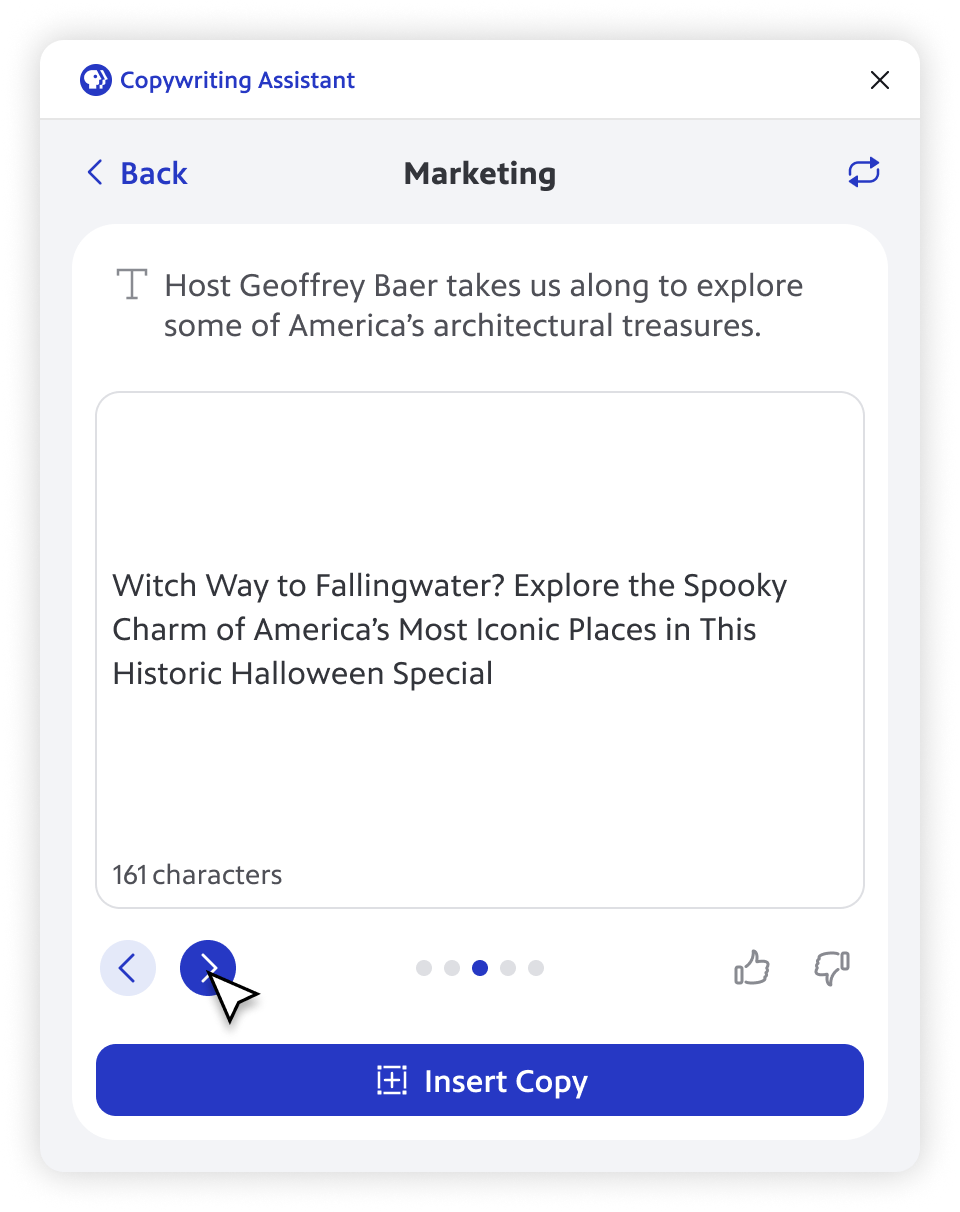
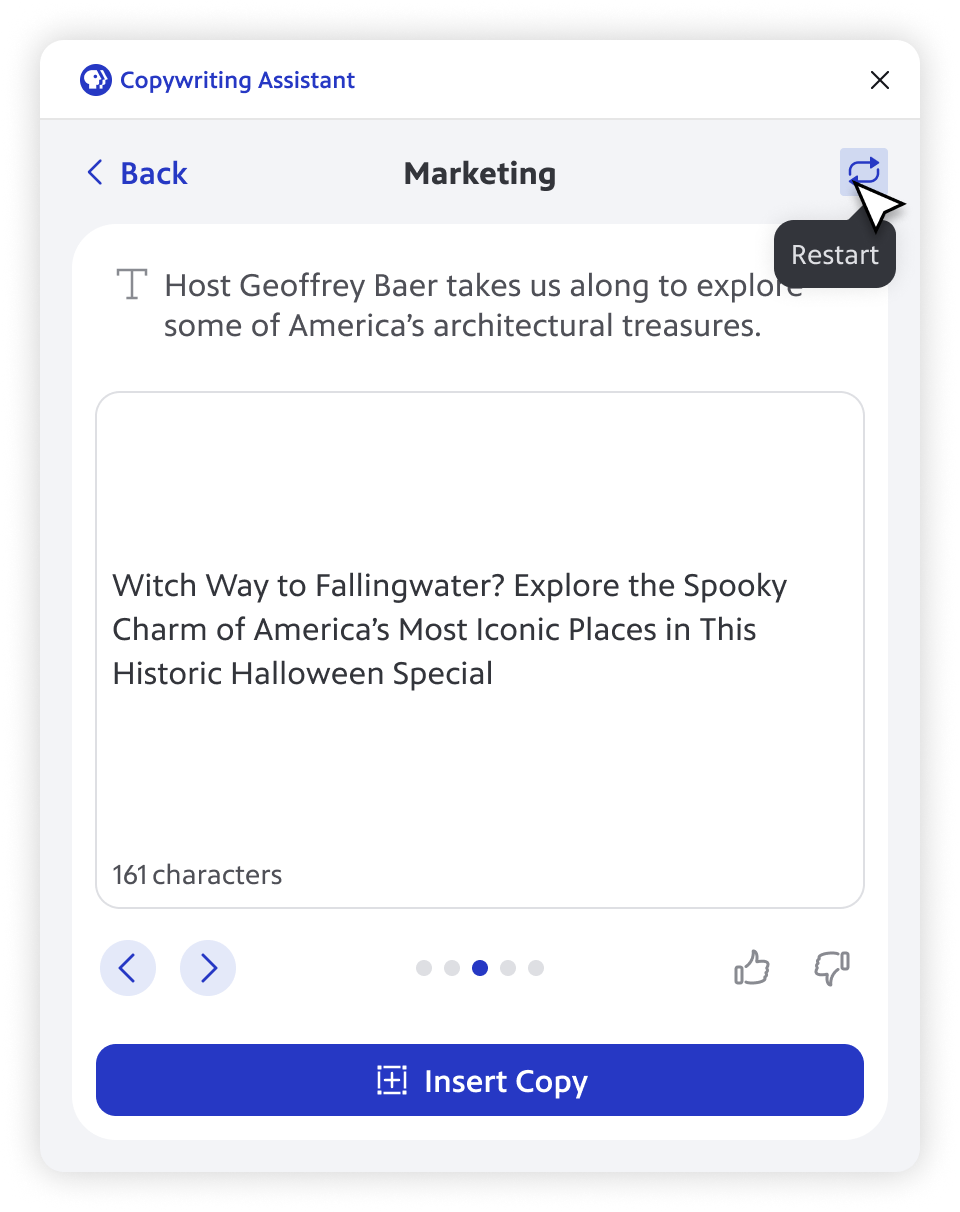
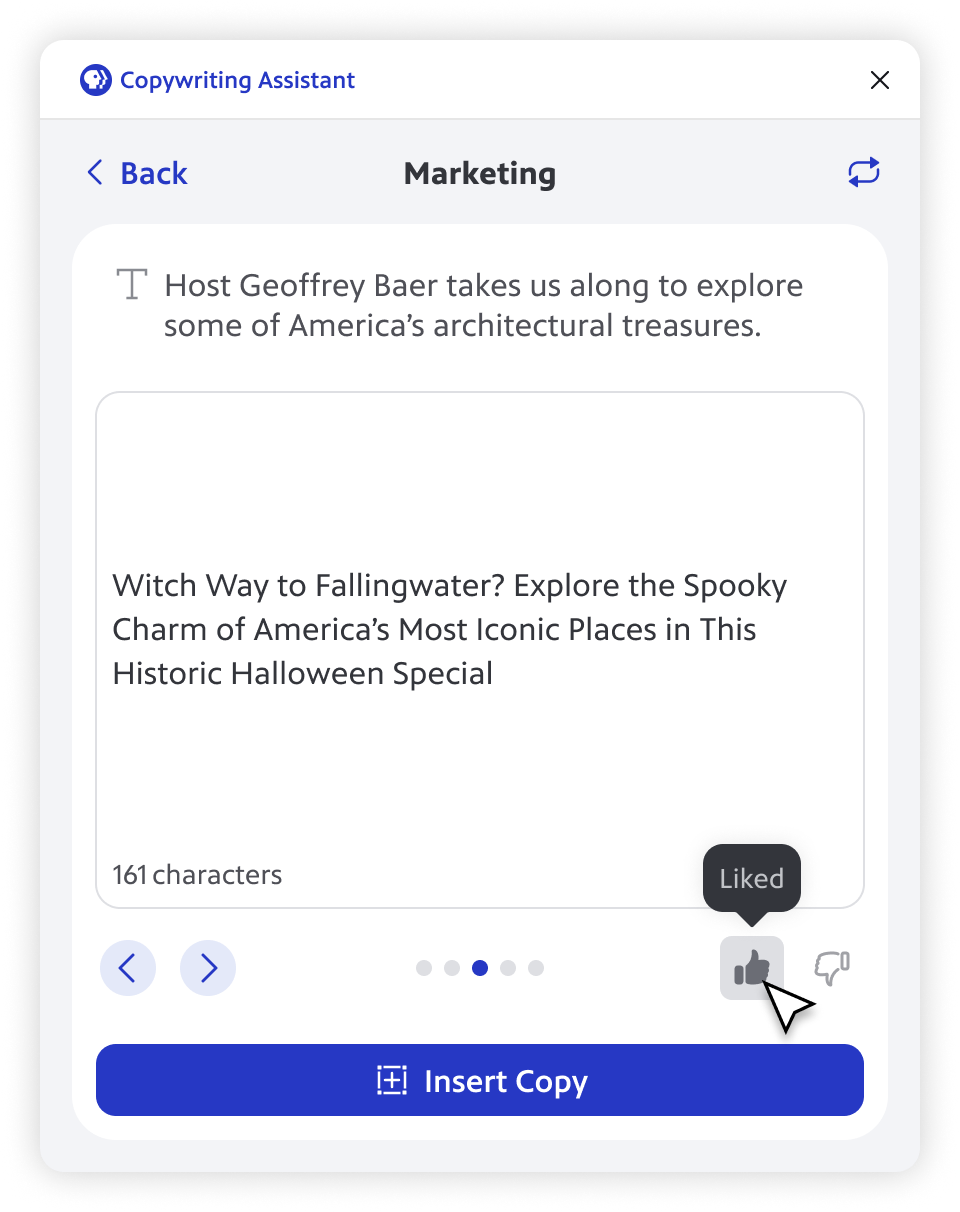
Streamlined Review, Feedback, and Insertion

Designers can browse the Assistant’s copy suggestions, provide feedback, and insert their selection directly into Figma with a single click.